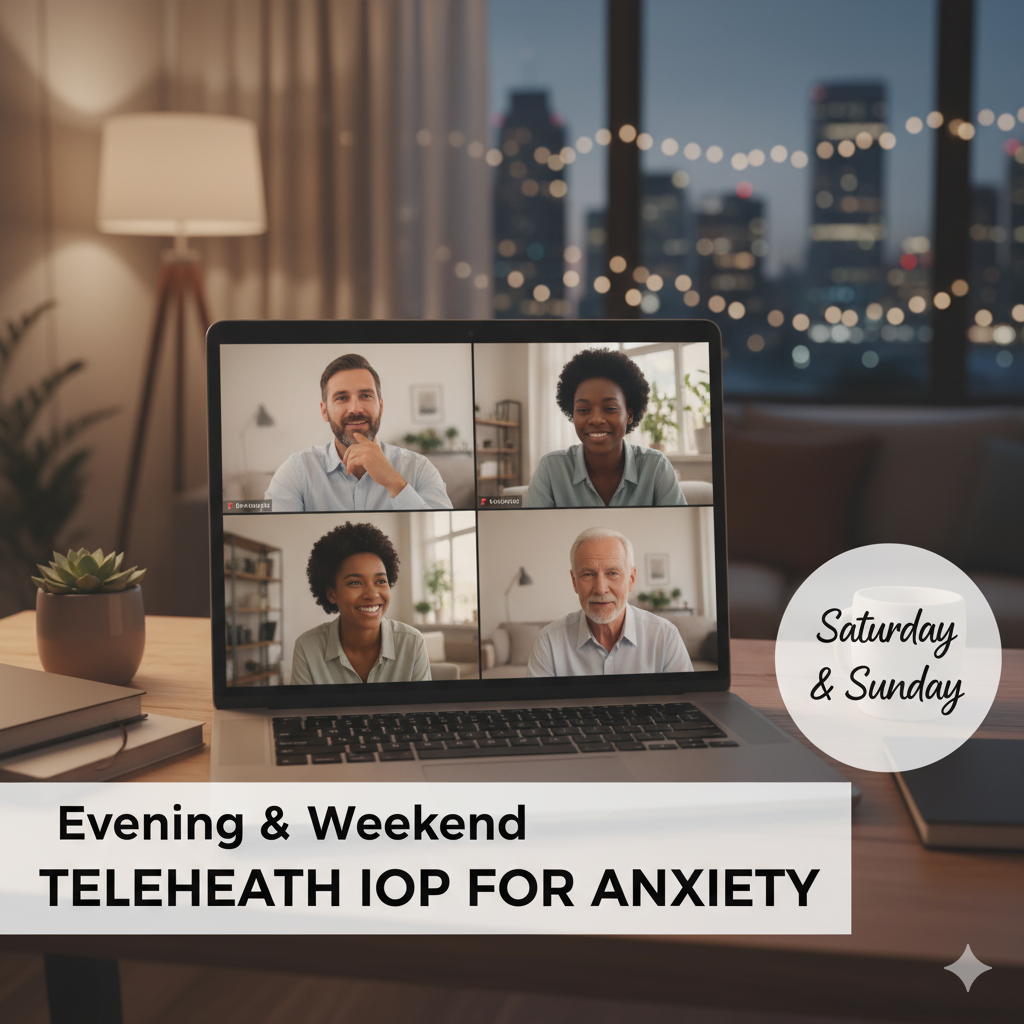
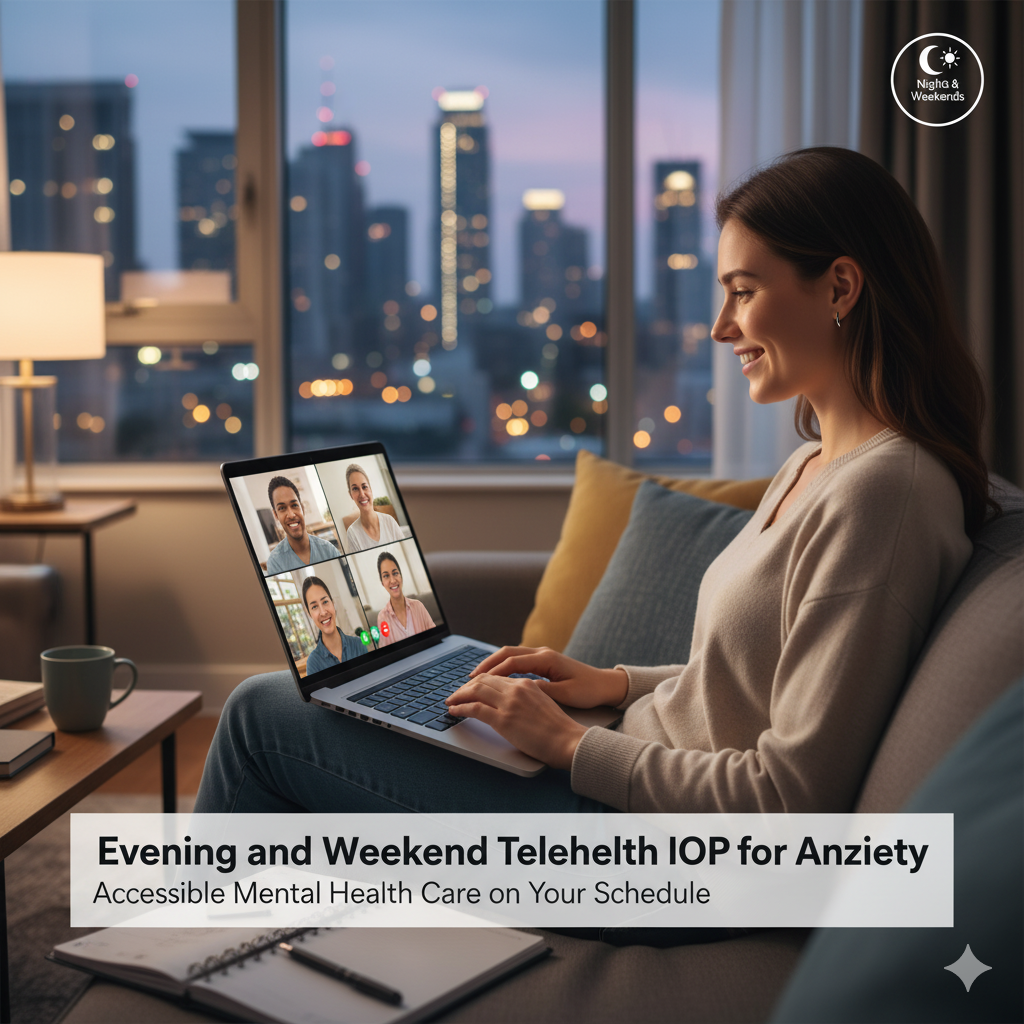
Evening and Weekend Telehealth IOP for Anxiety: Accessible Mental Health Care on Your Schedule
Anxiety Treatment That Works When You Do: Telehealth IOP for Nights and Weekends
For millions of Americans struggling with anxiety disorders, accessing intensive mental health treatment has traditionally meant choosing between their career and their wellbeing. The standard Monday-through-Friday, 9-to-5 mental health treatment model simply doesn’t work for working professionals, students, caregivers, and others with daytime commitments. This gap in accessible care has left countless individuals suffering in silence, their anxiety worsening while they wait for a treatment schedule that fits their life.
The emergence of telehealth Intensive Outpatient Programs (IOP) for anxiety with evening and weekend availability represents a fundamental shift in how mental health care can be delivered. These programs offer the same clinical rigor and therapeutic intensity as traditional daytime IOPs, but with the flexibility that modern life demands. Whether you’re managing generalized anxiety disorder, panic attacks, social anxiety, or other anxiety-related conditions, evening and weekend virtual IOP programs provide a pathway to recovery without sacrificing your job, education, or family responsibilities.
Understanding Intensive Outpatient Programs for Anxiety
An Intensive Outpatient Program represents a significant level of mental health care that falls between traditional weekly therapy and inpatient hospitalization. IOPs are designed for individuals who need more support than standard outpatient therapy can provide, but don’t require 24-hour medical supervision.
For anxiety treatment specifically, IOPs typically involve multiple therapy sessions per week, usually totaling 9-15 hours of structured therapeutic programming. This intensive approach allows for deeper therapeutic work, skill-building, and peer support that can create meaningful change in a relatively short timeframe.
The structure of an anxiety-focused IOP generally includes group therapy sessions, individual counseling, psychiatric evaluation and medication management when appropriate, and skill-development workshops focused on anxiety management techniques. Participants learn evidence-based strategies for managing their symptoms while receiving support from both clinicians and peers who understand their struggles.
What distinguishes IOP from less intensive treatment is the frequency and comprehensiveness of care. Rather than seeing a therapist once a week for an hour, IOP participants engage in treatment multiple times per week for several hours at a time. This concentrated therapeutic exposure creates momentum in treatment and provides more immediate support during crisis periods.
The Evolution of Telehealth Mental Health Services
The transformation of mental health care through technology has accelerated dramatically in recent years. What began as a convenience option has proven to be equally effective as in-person treatment for many conditions, particularly anxiety disorders. Teletherapy is changing the face of mental health care by removing traditional barriers to access.
Virtual mental health services eliminate geographical limitations, transportation challenges, and scheduling conflicts that have historically prevented people from accessing care. For anxiety sufferers specifically, telehealth offers the additional benefit of receiving treatment in a familiar, comfortable environment where they feel safe.
Research has consistently demonstrated that online IOP for anxiety delivers outcomes comparable to traditional in-person programs. The therapeutic alliance between client and clinician develops just as effectively through video conferencing, and the core therapeutic interventions—cognitive behavioral therapy, dialectical behavior therapy, and exposure-based treatments—translate seamlessly to the virtual format.
California mental health telehealth services have expanded significantly, with many providers now offering comprehensive virtual programming. Orange County mental health treatment centers have been particularly innovative in developing robust telehealth outpatient services that serve diverse populations.
Why Evening and Weekend IOP Programs Matter
The traditional mental health treatment schedule—daytime hours, Monday through Friday—was designed around the availability of providers, not the needs of patients. This model assumes that individuals can take extended time away from work or school, an assumption that doesn’t reflect the reality of most people’s lives.
For working professionals, taking multiple days off per week for treatment can mean risking job security, depleting limited time off, or facing questions from colleagues about their absence. Students face similar challenges with class schedules and academic commitments. Parents and caregivers struggle to find childcare during business hours. These logistical barriers often prevent people from seeking the level of care they actually need.
Evening and weekend telehealth IOP for anxiety solves this fundamental access problem. By offering intensive treatment during non-business hours, these programs make it possible to receive comprehensive mental health care without disrupting your daily responsibilities. You can attend your IOP sessions after work, during weekend mornings, or in other configurations that fit your schedule.
This flexibility is particularly valuable for high-functioning individuals with anxiety who are managing their symptoms well enough to maintain employment or education, but who recognize they need more support than weekly therapy provides. The remote intensive anxiety treatment program format allows you to continue meeting your obligations while dedicating focused time to your mental health.
Who Benefits from Telehealth IOP for Anxiety
Virtual IOP programs for anxiety serve a diverse population with varied needs. These programs are particularly well-suited for individuals experiencing moderate to severe anxiety symptoms that interfere with daily functioning but don’t require inpatient hospitalization.
Working adults with anxiety disorders often find evening IOP sessions ideal for their schedules. The ability to attend a virtual intensive mental health program after completing the workday means maintaining professional momentum while addressing mental health needs. Telehealth counseling for educators and other professionals has proven especially valuable for those in demanding careers.
College students and young adults managing social anxiety or panic disorder can participate in weekend intensive outpatient programs without missing classes. The at-home intensive anxiety program format allows them to engage in treatment from their dorm room or apartment, eliminating transportation concerns and providing a comfortable environment for vulnerable therapeutic work.
Parents and caregivers who struggle to arrange childcare during business hours benefit from the flexibility of evening sessions after their children are in bed, or weekend programs when their partner or support system is available to help with family responsibilities.
Those with specific anxiety disorders including generalized anxiety disorder (GAD), panic disorder, social anxiety disorder, obsessive-compulsive disorder (OCD), and specific phobias can all benefit from intensive outpatient anxiety treatment. The program can be tailored to address the particular manifestations and triggers of each individual’s anxiety presentation.
Evidence-Based Treatment Approaches in Virtual IOP
The therapeutic interventions used in telehealth IOP for anxiety are grounded in decades of research demonstrating what works for anxiety disorders. These programs don’t simply translate existing therapies to a screen—they thoughtfully adapt evidence-based practices for the virtual environment while maintaining clinical integrity.
Cognitive Behavioral Therapy (CBT) forms the foundation of most anxiety IOPs. This approach helps participants identify the thought patterns and beliefs that fuel their anxiety, challenge distorted thinking, and develop more adaptive ways of interpreting situations. Virtual CBT IOP for anxiety has been extensively studied and shows effectiveness equivalent to in-person delivery.
Dialectical Behavior Therapy (DBT) components, particularly mindfulness and distress tolerance skills, are frequently incorporated into anxiety treatment. Telehealth DBT IOP for anxiety evenings teaches practical skills for managing intense emotional states and tolerating discomfort without resorting to avoidance behaviors that maintain anxiety.
Exposure therapy, a gold-standard treatment for anxiety disorders, adapts remarkably well to the telehealth format. For individuals with social anxiety, the virtual group therapy setting itself becomes a form of exposure. Those with specific phobias can work with their therapist to design between-session exposures in their own environment, with the added benefit of learning to manage anxiety in the real-world contexts where they experience it.
Acceptance and Commitment Therapy (ACT) principles help participants develop a different relationship with their anxious thoughts and feelings. Rather than trying to eliminate anxiety entirely, ACT-informed treatment teaches psychological flexibility and values-based action even in the presence of discomfort.
Group therapy represents a crucial component of IOP programming. Telehealth group therapy for anxiety IOP schedule sessions provide opportunities to learn from others’ experiences, practice interpersonal skills, reduce isolation, and develop a support network. Many participants report that connecting with others who truly understand their struggles is one of the most valuable aspects of IOP.
Individual therapy sessions complement the group work, allowing for personalized attention to specific concerns and treatment goals. The combination of group and individual therapy creates a comprehensive treatment experience that addresses both universal aspects of anxiety and individual circumstances.
The Structure of Evening and Weekend Virtual IOP
Understanding what to expect from a virtual intensive outpatient program helps prospective participants determine if this level of care aligns with their needs and schedule. While specific programs vary, most evening and weekend telehealth IOPs follow similar structural patterns.
Typical program schedules offer sessions three to five evenings per week, generally starting between 5:00 PM and 7:00 PM and running for two to three hours per session. Weekend tracks might meet on Saturday and Sunday mornings or afternoons, with longer sessions to achieve the necessary weekly hour requirements. Some programs offer hybrid schedules combining both weeknight and weekend sessions.
The total weekly commitment usually ranges from nine to fifteen hours of structured programming, which aligns with the clinical standards that define IOP level of care. This intensive schedule continues for a duration that’s determined by individual needs and progress, but commonly lasts between four and twelve weeks.
A typical evening might begin with a mindfulness or grounding exercise to help participants transition from their day and become present for therapeutic work. Group therapy sessions explore common themes in anxiety management, with participants sharing experiences and learning from one another under skilled clinical facilitation. Skills-building components teach specific techniques like progressive muscle relaxation, cognitive restructuring, or exposure planning. Psychoeducation segments provide information about the neurobiology of anxiety, the rationale behind treatment approaches, and strategies for long-term management.
Broadway Treatment Center’s evening and weekend telehealth IOP for anxiety exemplifies this comprehensive approach, offering structured programming designed specifically for working adults and others who cannot attend during traditional business hours.
Medication Management in Virtual IOP
For many individuals with anxiety disorders, medication plays an important role in treatment. Virtual IOP programs typically incorporate psychiatric consultation and medication management services alongside therapy components.
During the initial assessment phase, participants meet with a psychiatrist or psychiatric nurse practitioner via video conference to discuss symptom history, previous medication trials, medical considerations, and treatment preferences. This evaluation helps determine whether medication might be beneficial as part of a comprehensive treatment approach.
For those who choose to incorporate medication, regular check-ins with the prescriber allow for monitoring of effectiveness and side effects, dosage adjustments as needed, and ongoing education about how medications work. The combination of medication and intensive therapy often produces better outcomes than either intervention alone for moderate to severe anxiety.
The telehealth format offers particular advantages for medication management. Rather than taking additional time off work for medication appointments, participants can meet with their prescriber during lunch breaks or from home. The frequency of contact in an IOP setting also allows for closer monitoring during the initial phases of medication treatment, when side effects are most likely to occur and dosage adjustments may be needed.
It’s important to note that medication is never mandatory in IOP. Many participants successfully complete anxiety treatment through therapy alone. The decision about whether to include medication is made collaboratively between the individual and their treatment team, based on symptom severity, previous treatment response, personal preferences, and clinical best practices.
Technology Requirements and Platform Security
Accessing a virtual intensive anxiety program requires basic technology that most people already have available. Understanding these requirements helps ensure a smooth treatment experience.
Essential equipment includes a computer, tablet, or smartphone with a camera and microphone. While smartphones can work for IOP participation, a larger screen often provides a better experience for group sessions and viewing shared materials. A stable internet connection is crucial—most programs recommend minimum speeds of 5 Mbps for smooth video conferencing, though faster connections provide better quality.
A private space where you can speak freely without being overheard is important for meaningful therapeutic engagement. This might be a bedroom, home office, or even your car if necessary. Using headphones or earbuds can help maintain privacy and improve audio quality.
Most telehealth platforms used for IOP are designed to be user-friendly, requiring minimal technical expertise. Programs typically provide technical orientation and troubleshooting support to help participants navigate any challenges.
Security and privacy protections are paramount in healthcare technology. Legitimate telehealth IOP programs use HIPAA-compliant platforms that encrypt all video and audio transmissions, protecting your confidential health information. Features like waiting rooms, password protection, and secure data storage ensure that your participation remains private.
Before beginning treatment, programs should clearly explain their privacy policies, how they protect your information, and what happens to any recordings or data generated during sessions. Don’t hesitate to ask detailed questions about security measures—reputable providers welcome these inquiries and take privacy seriously.
Comparing IOP to Other Levels of Care
Understanding where IOP fits within the continuum of mental health care helps individuals make informed decisions about the appropriate level of treatment for their needs.
Traditional weekly outpatient therapy typically involves one hour per week with a therapist. This standard format works well for many people managing mild to moderate symptoms, working on personal growth, or maintaining gains made in more intensive treatment. However, when anxiety becomes severe or begins significantly interfering with functioning, weekly therapy may not provide sufficient support.
Intensive Outpatient Programs offer substantially more contact—typically 9-15 hours weekly—providing the structure and intensity needed for individuals experiencing moderate to severe symptoms. IOP is appropriate when you need more than weekly therapy but don’t require 24-hour supervision or medical monitoring.
Partial Hospitalization Programs (PHP) represent the next level up, typically involving 4-6 hours of programming per day, five to seven days per week. PHPs serve individuals with more acute symptoms who need very intensive treatment but can safely return home each evening. The difference between virtual IOP and virtual PHP primarily lies in the number of hours and intensity of medical oversight.
Inpatient or residential treatment provides 24-hour care in a hospital or residential facility. This level is reserved for individuals who pose a safety risk to themselves or others, require medical detoxification, or need constant monitoring due to symptom severity.
For many working adults with anxiety, the jump from weekly therapy to PHP or inpatient treatment feels prohibitive due to the time commitment. Evening and weekend IOP fills this critical gap, offering intensive treatment that’s compatible with maintaining employment and other responsibilities.
Insurance Coverage and Financial Considerations
The cost of mental health treatment is a significant consideration for most individuals exploring IOP options. Understanding insurance coverage and payment options helps make informed financial decisions.
Most health insurance plans, including commercial insurance, Medicare, and Medicaid, cover Intensive Outpatient Programs when medically necessary. The Mental Health Parity and Addiction Equity Act requires that insurance companies cover mental health treatment, including IOP, at the same level they cover medical and surgical services.
Coverage specifics vary significantly between plans. Key factors affecting your out-of-pocket costs include whether the IOP provider is in-network with your insurance, your deductible and whether you’ve met it, your coinsurance or copay rates for mental health services, and any out-of-pocket maximum limits on your annual healthcare spending.
To verify your insurance benefits for telehealth IOP for anxiety, start by calling the member services number on your insurance card. Ask specifically about IOP coverage, required authorizations, in-network providers, session limits, and your estimated out-of-pocket costs. Many IOP programs also offer free insurance verification services, where their billing staff contacts your insurance company to determine your coverage before you begin treatment.
For those without insurance coverage or with plans that don’t adequately cover IOP, self-pay options may be available. Program costs vary widely but typically range from several hundred to several thousand dollars per week. Some programs offer sliding scale fees based on income, payment plans to spread costs over time, or financial assistance for those with demonstrated need.
Medicare provides coverage for Intensive Outpatient Program services when medically necessary, including telehealth delivery in many cases. Medi-Cal recipients in California can access IOP services through California’s Department of Health Care Services Mental Health Programs.
Don’t let insurance uncertainty prevent you from exploring treatment options. Most programs are willing to discuss costs upfront and work with you to find affordable solutions.
Finding the Right Telehealth IOP Program
Not all virtual IOP programs are created equal. Taking time to research options and ask the right questions helps ensure you find a program that meets your specific needs.
Start by identifying programs that offer the schedule flexibility you need. If you work traditional business hours, look specifically for programs advertising evening and weekend availability. Confirm the exact session times and whether they’ll accommodate your time zone if you’re considering out-of-state providers.
Accreditation and licensing matter. Verify that the program is licensed in your state (as telehealth regulations require providers to be licensed where the patient is located, not just where the provider is based). Look for accreditation from organizations like The Joint Commission or CARF, which indicates adherence to quality standards.
Treatment approach should align with your needs and preferences. Ask what therapeutic modalities the program uses, whether they specialize in anxiety disorders specifically, and how they tailor treatment to individual differences. Programs that offer evidence-based treatments like CBT, DBT, and exposure therapy generally demonstrate a commitment to clinical best practices.
Staffing qualifications indicate program quality. Licensed therapists (LCSW, LMFT, LPC, or psychologists) should facilitate groups and provide individual therapy. Psychiatric providers should be available for medication consultation. Ask about staff experience with anxiety disorders specifically.
Program philosophy and culture matter for your treatment experience. Some programs emphasize a medical model with heavy symptom focus, while others incorporate wellness and recovery principles. Some are more structured while others allow greater flexibility. Consider what environment would feel most supportive for your healing.
The SAMHSA National Helpline provides free, confidential referrals to mental health treatment facilities 24/7. Their FindTreatment.gov search tool allows filtering by treatment type, location, and payment options to identify IOP programs.
For California residents, county behavioral health departments can provide information about publicly funded IOP options, particularly for those with Medi-Cal coverage. Search for your specific county’s behavioral health services to connect with local resources.
The Treatment Journey: What to Expect
Beginning IOP represents a significant commitment to your mental health. Understanding the typical treatment journey helps set realistic expectations and prepares you for success.
The process usually begins with an initial assessment or intake appointment. During this confidential evaluation, a clinician will ask detailed questions about your anxiety symptoms, how they impact your daily life, your treatment history, current medications, support system, and treatment goals. This information helps determine whether IOP is the appropriate level of care and allows the team to develop an individualized treatment plan.
If IOP is recommended and you choose to proceed, you’ll typically have an orientation session before beginning regular programming. This orientation covers program expectations, introduces you to the telehealth platform, reviews confidentiality and group guidelines, and answers logistical questions.
The first few sessions of IOP can feel overwhelming. You’re meeting new people, learning program structures, and beginning to engage with difficult feelings and experiences. This discomfort is normal and temporary. Most participants find that anxiety about attending group decreases significantly after the first few sessions as they become familiar with the format and develop trust with the group.
Throughout the program, you’ll notice patterns in how sessions are structured while also experiencing variation in the specific content addressed. Some sessions might focus heavily on skill-building, teaching concrete techniques for managing anxiety symptoms. Others explore the underlying thoughts and beliefs that fuel anxiety. Processing sessions allow participants to discuss current struggles and receive support and feedback.
Progress in IOP isn’t always linear. You may have breakthrough moments where concepts suddenly click, followed by challenging periods where symptoms temporarily worsen or you struggle to apply skills. This is part of the healing process. The intensive nature of IOP means you have frequent opportunities to work through difficulties with your treatment team.
As you approach the end of your planned IOP duration, focus shifts toward discharge planning and aftercare. The transition out of intensive treatment is carefully planned to maintain your progress. Most programs recommend stepping down to less intensive services rather than ending treatment abruptly.
Aftercare and Continuing Support
Completing IOP is a significant accomplishment, but it’s not the end of your mental health journey. Thoughtful aftercare planning helps maintain gains and continue building on the foundation established during intensive treatment.
Most individuals transition from IOP to regular outpatient therapy, typically weekly sessions with a therapist. This lower-intensity support allows you to continue working on goals while demonstrating your ability to manage with less frequent clinical contact. Your IOP treatment team can often provide referrals to outpatient therapists, or you may choose to continue with someone you were seeing before IOP.
Some programs offer alumni groups or lower-intensity continuing care groups for IOP graduates. These optional sessions provide ongoing peer support and accountability without the full time commitment of active treatment. Staying connected to others from your IOP cohort can be valuable for maintaining motivation and remembering skills learned.
Psychiatric medication management continues as needed after IOP. If you started or adjusted medications during IOP, you’ll need ongoing prescriber appointments to monitor your response and make any necessary changes. Many psychiatrists offer telehealth appointments, making this continuing care convenient.
Developing a personalized relapse prevention plan during IOP helps you recognize early warning signs of increasing anxiety and know what steps to take if symptoms begin to worsen. This plan might include coping strategies you learned, people to reach out to for support, lifestyle factors that help manage your anxiety, and circumstances under which you’d seek professional help again.
Crisis resources remain available even after treatment ends. The 988 Suicide & Crisis Lifeline provides free, confidential support 24/7 for anyone in emotional distress. The California Peer-Run Warmline offers non-emergency emotional support from peers with lived experience.
Special Populations and Considerations
Telehealth IOP for anxiety can be adapted to serve diverse populations with specific needs and circumstances.
Young adults navigating the transition to independence often struggle with anxiety about their capabilities and future. Virtual IOP for young adults with anxiety addresses developmental concerns specific to this age group while teaching skills for managing anxiety independently. The flexibility of evening and weekend programming accommodates college schedules and early-career demands.
Professionals in high-stress careers may experience anxiety related to work performance, perfectionism, or burnout. Virtual IOP for high-functioning anxiety professionals recognizes that participants are managing significant responsibilities while addressing mental health needs. Treatment can explore the relationship between career demands and anxiety symptoms while preserving confidentiality about participation.
Parents and caregivers face unique challenges in accessing mental health care. At-home intensive anxiety programs for working adults with family responsibilities offer the flexibility needed to balance treatment with parenting duties. Sessions during children’s bedtime hours or weekend mornings when co-parents are available make participation feasible.
Individuals with co-occurring conditions benefit from integrated treatment. Virtual IOP for co-occurring anxiety and depression addresses the relationship between these conditions and teaches skills applicable to both. Programs that offer anxiety programs with medication management can address multiple symptoms comprehensively.
Those with specific anxiety disorder subtypes may seek specialized programming. Some IOPs focus on particular presentations like social anxiety, panic disorder, or OCD. Online exposure therapy IOP for OCD, for example, might emphasize exposure and response prevention specifically, rather than general anxiety management.
Overcoming Barriers to Treatment
Despite the increased accessibility of telehealth IOP with evening and weekend options, individuals may still face barriers to accessing care. Recognizing and addressing these obstacles helps more people receive needed treatment.
Stigma about mental health treatment prevents many people from seeking help. Concerns about what others will think, appearing weak, or being judged keep individuals suffering rather than getting support. The privacy of telehealth can actually help reduce stigma—nobody sees you entering a mental health facility, and you can attend sessions discreetly from home. Remember that seeking treatment demonstrates strength and self-awareness, not weakness.
Time constraints remain a concern even with flexible scheduling. Between work, family, personal obligations, and the need for rest, adding 9-15 hours of weekly treatment feels overwhelming. Consider that untreated anxiety already consumes enormous time and energy through worry, avoidance, and reduced efficiency. The time invested in IOP is temporary and creates long-term time savings by teaching you to manage anxiety more effectively.
Financial concerns are valid, especially if you’re uncertain about insurance coverage or facing high out-of-pocket costs. However, untreated anxiety also carries financial costs through reduced work productivity, missed opportunities, and potential job loss if symptoms become unmanageable. Explore all available options including insurance coverage, payment plans, sliding scales, and whether your employer offers Employee Assistance Program benefits that might help cover costs.
Skepticism about telehealth effectiveness may make some individuals reluctant to try virtual treatment. Research consistently shows that telehealth mental health services produce outcomes equivalent to in-person care for most conditions, including anxiety disorders. Many people actually find that participating from home feels safer and more comfortable than in-person settings, especially when anxiety involves leaving home or being in new environments.
Technology anxiety presents an ironic barrier for those seeking anxiety treatment. Concerns about using video platforms, dealing with technical difficulties, or struggling with unfamiliar technology can prevent people from trying telehealth options. Most programs offer technical support, platform tutorials, and troubleshooting assistance. The technology required is generally straightforward, similar to video calling with family or friends.
The Science Behind Telehealth Effectiveness
Understanding why virtual IOP works helps build confidence in choosing this treatment modality. The effectiveness of online intensive outpatient programs for anxiety is supported by substantial research evidence.
The therapeutic alliance—the collaborative, trusting relationship between therapist and client—is the single strongest predictor of positive treatment outcomes across all forms of psychotherapy. Research demonstrates that therapeutic alliance develops equally well in telehealth settings as in person. Clients report feeling just as connected to their providers, just as comfortable sharing vulnerable material, and just as satisfied with the care received.
For anxiety disorders specifically, the core treatment components translate effectively to virtual delivery. Cognitive behavioral therapy, the gold-standard treatment for anxiety, involves identifying thought patterns, challenging cognitive distortions, and practicing new behaviors. None of these processes inherently require in-person contact. The therapist’s ability to guide this work depends on communication and collaboration, both of which occur naturally through video conferencing.
Group therapy, a crucial IOP component, functions well in virtual formats. Participants can see and hear one another, share experiences, provide feedback, and develop supportive relationships. Some individuals actually find virtual groups less intimidating than in-person settings, particularly those with social anxiety who feel more comfortable participating from their own space.
Skills practice, homework completion, and generalization of learning may actually be enhanced in telehealth formats. When you learn anxiety management skills and immediately practice them in your actual environment—your home, neighborhood, or workplace—you develop real-world competence rather than needing to transfer learning from a clinical setting to daily life.
The convenience and accessibility of virtual treatment improves attendance rates and reduces dropout, which in turn improves outcomes. When treatment fits your schedule and eliminates travel time, you’re more likely to attend consistently and complete the full program duration. This consistency is crucial for achieving lasting change.
Making the Decision: Is Evening/Weekend Telehealth IOP Right for You?
Determining whether a virtual intensive outpatient program matches your needs involves honest assessment of your symptoms, circumstances, and readiness for change.
Consider IOP if your anxiety significantly interferes with your ability to function in important life areas like work performance, relationships, or daily activities. If you’re struggling to maintain your responsibilities, avoiding situations you previously managed, or experiencing physical symptoms that impact your quality of life, intensive treatment may be appropriate.
IOP often makes sense when weekly therapy isn’t enough. If you’ve been in traditional outpatient therapy but feel stuck, continue to struggle despite consistent effort, or need more support than one hour per week provides, stepping up to intensive treatment can create momentum. Some people also enter IOP as a step down from hospitalization or residential treatment, using it to transition back to full independence.
Evening and weekend scheduling specifically serves those who cannot take extended time away from work, school, or family commitments during business hours. If maintaining your job is essential, if you’re in school with required classes, or if you have caregiving responsibilities that prevent daytime attendance, after-hours programming removes this barrier.
The telehealth format works best for individuals who have a relatively safe and stable living environment where they can participate privately. If your home situation is chaotic, unsafe, or doesn’t allow for privacy during sessions, in-person treatment may be preferable. Similarly, if you’re experiencing acute safety concerns like active suicidal ideation with intent and plan, a higher level of care may be necessary before IOP.
Readiness for change matters. IOP requires significant commitment—showing up multiple times per week, engaging actively in sessions, completing between-session work, and applying what you learn. If you’re feeling ambivalent about treatment or uncertain whether you want to change, that’s okay and worth exploring with a therapist, but might indicate that a lower intensity of care is more appropriate for now.
Resources for Getting Started
When you’re ready to explore telehealth IOP options, several resources can help you find appropriate programs and access support.
The Recover provides comprehensive information about mental health and addiction treatment options, including telehealth services. As a trusted referral source, they can connect you with programs that match your needs and circumstances.
Broadway Treatment Center offers specialized evening and weekend virtual IOP programming designed specifically for working adults with anxiety and other mental health conditions. Their flexible scheduling makes intensive treatment accessible for those with daytime commitments.
National resources provide additional pathways to care. The SAMHSA National Helpline at 1-800-662-4357 operates 24/7, offering free, confidential information and treatment referrals. FindTreatment.gov allows you to search for programs by location, treatment type, and payment options.
For crisis support, the 988 Suicide & Crisis Lifeline provides immediate help for anyone in emotional distress. Simply call or text 988 to connect with a trained crisis counselor. This service is free, confidential, and available around the clock.
California residents can access state-specific resources through the California Department of Health Care Services Mental Health Programs, which oversees the public mental health system including Medi-Cal services. The California Peer-Run Warmline at 1-855-845-7415 offers non-emergency emotional support from peers with lived experience.
Local resources through your county behavioral health department can provide information about community-based IOP options, particularly if you have Medi-Cal coverage. Search for “[Your County] Behavioral Health Services CA” to find your local department’s contact information.
Frequently Asked Questions
What are the exact days and times for the evening and weekend IOP sessions?
Evening and weekend IOP schedules vary by provider, but most programs offer sessions three to five evenings per week starting between 5:00 PM and 7:00 PM, lasting two to three hours each. Weekend tracks typically meet Saturday and Sunday mornings or afternoons for longer sessions. Some programs offer hybrid schedules combining weeknights and weekends. Contact specific programs to confirm their current schedule offerings, as session times are designed to accommodate typical work schedules.
How many hours per week will I need to commit to the program?
Intensive Outpatient Programs typically require nine to fifteen hours of structured programming per week to meet clinical standards for IOP level of care. The exact number depends on the specific program structure and your individual treatment needs. This represents a significant but manageable commitment—roughly equivalent to a part-time job—that’s scheduled outside of business hours to minimize interference with your work and personal responsibilities.
How long does the entire Telehealth IOP program typically last?
Most telehealth IOP programs for anxiety last between four and twelve weeks, with six to eight weeks being common. The duration depends on several factors including symptom severity at admission, rate of progress, insurance coverage, and individual treatment goals. Some individuals complete their planned program duration, while others may need extended time if they’re making progress but haven’t yet achieved stability. Your treatment team will regularly assess your progress and discuss the appropriate length of treatment for your situation.
How is the evening and weekend schedule designed to fit around a full-time work or school schedule?
Programs intentionally schedule sessions after typical work hours end and during weekend times when most people are free from job and school obligations. Evening sessions commonly begin at 6:00 PM or 6:30 PM, giving you time to finish work, commute home if necessary, and log in from your computer. Weekend sessions might occur Saturday mornings or Sunday afternoons. The virtual format eliminates travel time, allowing you to attend sessions immediately after work without the need to commute to a treatment facility. Many working professionals successfully complete IOP while maintaining full-time employment.
Is this program suitable for clients in my state and time zone?
Telehealth regulations require that providers be licensed in the state where the patient is physically located during treatment, not just where the provider is based. When considering a telehealth IOP, verify that the program is licensed to provide services in your state. Programs serving multiple states typically handle the licensing requirements, but you should confirm this before beginning treatment. For time zone considerations, clarify when sessions occur in your local time to ensure they fit your schedule. Most programs can accommodate participants across different time zones if session times work for your location.
What is the difference between a virtual IOP and a virtual PHP?
Both Intensive Outpatient Programs and Partial Hospitalization Programs provide structured mental health treatment, but they differ in intensity. IOP typically involves nine to fifteen hours of programming per week across multiple days, allowing participants to maintain work, school, and family responsibilities. PHP is more intensive, usually requiring four to six hours of programming per day, five to seven days per week—essentially a full-time commitment. PHP serves individuals who need more intensive treatment than IOP provides but don’t require 24-hour inpatient care. Most people begin with the level of care that matches their symptom severity and may step down from PHP to IOP as they stabilize.
Is Telehealth IOP for anxiety as effective as an in-person, daytime program?
Research consistently demonstrates that telehealth delivery of evidence-based mental health treatment produces outcomes equivalent to in-person care for anxiety disorders. The therapeutic relationship develops just as effectively through video conferencing, and the core treatment components—cognitive behavioral therapy, skills training, group support—translate seamlessly to the virtual format. What matters most for treatment effectiveness is the quality of the therapeutic interventions and your engagement with the process, not whether you’re sitting in an office or participating from home. Many individuals find telehealth more comfortable and accessible, which can actually enhance outcomes by improving attendance and reducing barriers to participation.
What specific types of therapy are used to treat anxiety in the virtual IOP?
Evidence-based therapeutic approaches form the foundation of quality anxiety IOP programs. Cognitive Behavioral Therapy helps identify and change thought patterns and behaviors that maintain anxiety.