Orange County vs Los Angeles Rehab: Choosing a Treatment Setting
Two counties, forty miles apart, holding between them one of the largest concentrations of addiction treatment in the United States. People comparing Orange County vs Los Angeles rehab usually start by comparing individual programs, and that is the wrong level to start at. The two markets are shaped by different forces, and the differences change which questions matter.
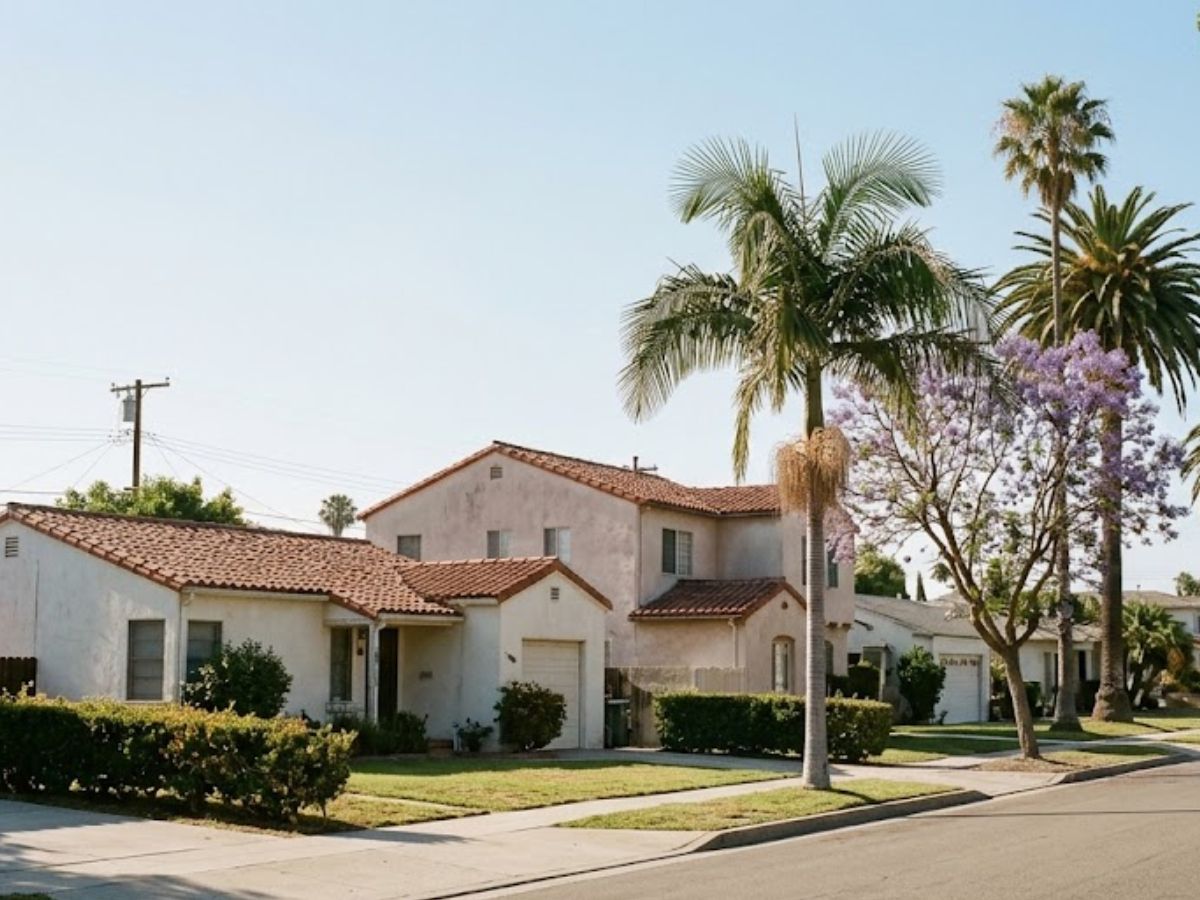
Orange County has an unusual density of small residential facilities, much of it in ordinary residential neighborhoods, and that density is legal by design rather than by accident. Los Angeles has scale, academic medicine, and the largest county-run substance use system in the state, with a public tool that shows treatment bed availability in something close to real time. Neither of those is better in the abstract. They are better for different people in different situations.
This page explains why each market looks the way it does, what the state regulatory floor guarantees in both, which factors should actually drive the decision, and how to access the public system in each county if you are on Medi-Cal or uninsured.
Weighing programs in both counties?
We can tell you what each program is licensed and designated for, which plans it contracts with, and what the aftercare picture looks like near where you actually live. It costs nothing.
Call (888) 510-3898Free and confidential, 24 hours a day. The Recover is a referral network of licensed, independent treatment providers, and does not pay or accept payment for individual client referrals.
The Short Version
| Orange County | Los Angeles County | |
|---|---|---|
| Market character | Dense cluster of small residential facilities, concentrated in coastal and south county neighborhoods | Very large and varied, spread across a huge geographic area |
| Typical residential setting | Six-bed houses in residential streets | Everything from six-bed homes to large institutional programs |
| Academic and hospital medicine | Present, less concentrated | Several major academic medical centers |
| Public system entry point | OC Links, 855-625-4657 | Substance Abuse Service Helpline, 1-800-854-7771 option 2 |
| Real-time bed availability tool | No public equivalent | Service and Bed Availability Tool, run by the county |
| Choice at a given level of care | High, quality uneven | High, with more variation in model and setting |
| Travel and logistics | Compact; most of the county within 45 minutes | Large; traffic and distance are real planning factors |
If you want the one-sentence version of Orange County vs Los Angeles rehab: Orange County gives you more options packed closer together with more variation in quality, and Los Angeles gives you a deeper public system and more medical infrastructure across a much harder geography.
Why Orange County Looks the Way It Does
The density of small residential treatment homes in Orange County is not a regulatory failure. It is the predictable result of a rule that works exactly as written.
Under California law, a licensed alcohol or drug recovery facility serving six or fewer residents is treated as a residential use for zoning purposes, the same as an ordinary single-family home. Cities cannot require a conditional use permit or apply the zoning conditions they would apply to a commercial facility. The California State Auditor put the consequence in the subtitle of its October 2024 report on drug and alcohol treatment facilities: they “Are Sometimes Concentrated In Residential Areas, As Allowed, But State Oversight Is Not Always Timely or Thorough.”
As allowed is the operative phrase. Six-bed homes can sit near one another, sometimes under shared ownership, without triggering local review, and in desirable coastal areas with good housing stock the economics favor exactly that pattern.
Why the clusters are legal
California treats a licensed facility serving six or fewer residents as a residential use for zoning, the same as a single-family home, so cities cannot require a conditional use permit. The California State Auditor’s October 2024 report put it in its subtitle: facilities “Are Sometimes Concentrated In Residential Areas, As Allowed, But State Oversight Is Not Always Timely or Thorough.” AB 3 would have narrowed that protection for clustered facilities within 300 feet under shared ownership — it died on January 31, 2026.
The Legislature has looked at narrowing it. The Auditor advised that overconcentration could be addressed without violating federal housing and disability law, suggesting the state could require findings when a proposed facility would cause overconcentration, or narrow the zoning exemption for closely located facilities that together house more than six residents. Assembly Bill 3, introduced by Assemblymember Diane Dixon of Newport Beach, would have removed the residential-use protection from newly licensed facilities within 300 feet of another facility under shared ownership, direction, programs or amenities where the combined total exceeded six residents, and from homes tied to commercially operated facilities. It died on January 31, 2026 and was filed with the Chief Clerk the following week.
So the position today is unchanged: the clustering is lawful, and local governments have limited tools to shape it. For a family choosing a program this is neither good news nor bad news. It is an explanation of why one neighborhood may contain several facilities with similar websites and very different standards of care, and why due diligence carries more weight here than brand impressions do.
What the density does buy you is genuine choice. There are more beds at more price points within a short drive in Orange County than in almost anywhere else in the country, and for someone who needs a specific population focus, a particular clinical model or a bed this week, that matters.
Why Los Angeles Looks Different
Los Angeles County has roughly three times the population of Orange County spread over an area many times larger, and the treatment landscape reflects that. Programs range from six-bed homes to large institutional providers, and the county contains several major academic medical centers, which matters when someone needs medical complexity handled alongside addiction treatment.
The bigger structural difference is the public system. Los Angeles County Substance Abuse Prevention and Control reports serving roughly 275,000 people a year across prevention, harm reduction, treatment and recovery. Its Service and Bed Availability Tool is a filterable service locator with real-time bed availability, and it won a California State Association of Counties innovation award. There is no public equivalent in Orange County.
That tool is worth knowing about even if you are not using the public system, because it gives you something no marketing page will: an independent view of what level of care actually has capacity right now, in a specific area. It will not tell you whether a program is any good. It will tell you whether the thing you were told is unavailable really is.
The geography cuts the other way. Los Angeles County is large enough that a program forty-five minutes away in theory can be ninety minutes away in practice, which affects family involvement during treatment and continuity of care afterwards. Our Los Angeles treatment guide covers the local landscape in more detail.
Not sure which level of care is the right one?
That question comes before geography. A clinical conversation settles it, and the shortlist follows from the answer rather than the other way round.
The Regulatory Floor Is the Same in Both Counties
State licensing does not vary by county. Whatever you are told about local reputation, the legal standard a residential facility must meet in Newport Beach is the standard it must meet in Pasadena.
Two 2018 laws, implemented through DHCS Information Notice 19-003, set much of that floor, and several provisions are directly useful when you are evaluating a program.
The single best question to ask on a tour
“Are all treatment services delivered at this address, or is anyone transported elsewhere during the day?” Under California law, all licensable services must be provided within the licensed street address, and residents cannot be transported off-site to receive them. A residential house that vans its residents to a day program elsewhere is describing an arrangement the law prohibits.
New facilities are on probation for a year
Initial residential licenses issued on or after January 1, 2019 run two years and are provisional for the first year. DHCS may conduct an unannounced compliance review before the provisional period ends, and may revoke for good cause at any time during it. If a provisional license is revoked, the operator cannot apply for a new initial residential license for five years. Asking how long a facility has been licensed, and whether it is past its provisional year, is a fair question with a factual answer.
Treatment must happen at the licensed address
All licensable services must be provided within the licensed street address, and residents cannot be transported off-site to receive them. This provision matters more than it sounds. The pattern it prohibits — a residential house that vans its residents to an unaffiliated day program elsewhere — was a defining feature of the problems that drew regulatory attention to Southern California, and it remains the single most useful thing to ask about on a tour.
Ownership ties to sober living must be disclosed
Licensed facilities and certified programs must disclose any ownership, control or financial interest in a recovery residence, and any contractual relationship with an entity providing addiction treatment or recovery services to their clients. Failure to disclose can lead to suspension or revocation. If a program steers you toward a particular sober living house after discharge, you are entitled to ask what the relationship is.
A valid medication prescription cannot be grounds for refusal
Facilities cannot deny admission solely because someone has a valid prescription for an FDA-approved medication for addiction treatment. Programs that are hostile to buprenorphine or naltrexone still exist, and this provision gives you clear footing to ask the question directly and to walk away from an answer you do not like.
Operating unlicensed is now expensive
Civil penalties for providing licensable services without a license rose from $200 to $2,000 per day, and an unlicensed operator cited under the statute cannot apply for an initial license for five years.
None of this tells you whether a program is good, only whether it is operating lawfully. Our guide to vetting a California treatment center explains what a DHCS license actually certifies, how to check a facility against the state’s own records, and what the level of care designations mean.
The Outpatient Gap, Which Applies Everywhere
One asymmetry is worth understanding before you compare programs in either county. Residential facilities are licensed. Outpatient and intensive outpatient programs are certified, which is a different process against different standards, and there is no facility license for a non-residential setting.
This is not a county issue, it is a statewide one, and it means the credential that reassures you about a residential program does not exist in the same form for the outpatient program you step down into. Since most treatment in California happens on an outpatient basis, that gap covers a lot of care. When you are comparing intensive outpatient programs, ask about certification status, clinical staffing and group size rather than assuming a license sits behind it.
Orange County vs Los Angeles Rehab: What Should Actually Drive the Decision
Market characteristics matter less than these six factors, in roughly this order.
1. The level of care the assessment indicates
This comes first and it is clinical, not geographic. Someone who needs medically monitored withdrawal management should not be choosing between counties, they should be going to a setting equipped for it. Someone stepping down to intensive outpatient has far more latitude. Our comparison of inpatient and outpatient treatment sets out what drives that call.
2. Where aftercare will happen
Treatment is weeks. Aftercare is years. The single most common planning error is choosing a residential program in a county where the person will not be living afterwards, which severs the therapeutic relationship exactly when continuity matters most. If someone lives and works in Long Beach, a program in Costa Mesa that hands off cleanly to a Long Beach outpatient provider beats a nominally better program that does not.
3. Co-occurring mental health needs
Where there is a significant psychiatric condition alongside the substance use, the depth of the behavioral health infrastructure starts to matter, and Los Angeles’s concentration of academic medical centers becomes relevant. Our page on dual diagnosis treatment explains what integrated care should look like at program level, and the Los Angeles dual diagnosis guide covers local options.
4. Who is paying
If a commercial plan is paying, network participation decides the shortlist before geography does, and in-network status differs between carriers and products. Our guides to Anthem Blue Cross coverage and Blue Shield of California coverage work through two of the largest. If Medi-Cal is paying, or nobody is, the county system is the route and the next section covers it.
5. The sober living question
Both counties have large recovery housing ecosystems, and sober living homes that provide only housing and peer support are outside the state licensing system entirely — DHCS does not license, certify, or investigate complaints about them. That is a meaningful gap in a high-density market. Our overview of sober living and recovery housing explains how it fits into a plan, with local detail for Orange County and Los Angeles.
6. Whether distance from home is the point
Sometimes it is. Separation from a using environment, from a supplier, from a relationship that is part of the problem, can be clinically justified. But it should be a deliberate clinical decision made with a clinician, not a default produced by a marketing pitch about sunshine and ocean views. If someone recommends travel, ask what the clinical rationale is and what the aftercare plan looks like on return.
Getting a Bed: What Availability Actually Looks Like
Availability is the factor families underestimate most, and it behaves differently in the two counties.
In Orange County, density works in your favor. With a large number of small residential facilities within a compact area, there is usually something open at most levels of care within a short drive, and the practical constraint is more often whether the open bed is at the right level of care and in a program you would actually choose. The risk in a dense market is being routed toward whoever has capacity and a marketing budget rather than toward the right clinical fit.
In Los Angeles County, you can check. The Service and Bed Availability Tool lets you filter by service type and see real-time availability, which turns a question you would otherwise be asking facility by facility into something you can survey in a few minutes. It covers the county-contracted network rather than every private program, so it is not a complete picture of the market, but it is an independent one.
Two practical points apply in both counties. First, a bed held for you is not the same as a bed offered to you, and verbal holds expire; ask how long the bed is held and get the answer in writing or by text. Second, if an assessment indicates a level of care and nothing is available at that level within a reasonable time, that is a documented access problem rather than a reason to accept a lower level of care. If a commercial plan is involved, California requires it to arrange medically necessary care within geographic and timely access standards, and to cover out-of-network care at in-network cost sharing where the network cannot deliver.
That provision is the most underused protection in California coverage, and our page on California SUD parity explains how to invoke it. Build a record first: get the in-network list in writing, call the facilities, and note who has no bed, who does not contract with your product, and who cannot admit inside the access standard.
If You Are Using Medi-Cal or Have No Insurance
Public system entry points
Los Angeles County — Substance Abuse Service Helpline, 1-800-854-7771, option 2. Plus the county’s Service and Bed Availability Tool.
Orange County — OC Links, 855-625-4657, Mon–Fri 8am–6pm, with online chat. English, Spanish, Vietnamese and Farsi.
Anyone can call either line, including family members looking for help on someone else’s behalf.
Both counties run substantial public systems, and both have a single number to start with.
In Los Angeles County, the Substance Abuse Service Helpline is 1-800-854-7771, option 2, operated by Substance Abuse Prevention and Control. The county also publishes the Service and Bed Availability Tool, the member handbook and a provider directory, and runs RecoverLA as a general information resource.
In Orange County, OC Links is the information and referral line for the county Behavioral Health Services system, on 855-625-4657, Monday to Friday 8am to 6pm, with online chat. Navigators work out which program fits and try to connect you directly while you are still on the call. It covers alcohol and drug inpatient and outpatient programs as well as mental health and crisis services, and operates in English, Spanish, Vietnamese and Farsi, with other languages through translation services. Anyone can call, including family members looking for help for someone else.
Medi-Cal substance use treatment in both counties runs through the county Drug Medi-Cal Organized Delivery System, which covers a continuum built around the ASAM levels under a federal waiver. The parity protections that apply to commercial coverage do not apply to Medi-Cal, and appeals run through the county behavioral health department rather than a state insurance regulator.
Want help checking a program before you commit?
Licensing status, level of care designation, provisional year, network participation. We can look all of it up with you and tell you which questions are worth asking next.
Call (888) 510-3898No cost, no obligation. Your information is not sold or shared for marketing.
Red Flags Worth Extra Attention in a High-Density Market
These apply anywhere in California, and they come up more often where there are more operators competing for the same admissions — which is why they deserve extra weight when you are weighing Orange County vs Los Angeles rehab options in the denser parts of either county.
- A residential program that transports residents off-site for treatment services. Licensable services must be delivered at the licensed address.
- A referral to a specific sober living house with no explanation of the relationship. Ownership and contractual ties must be disclosed.
- Anyone who is paid by the facility they are steering you toward. California prohibits licensed facilities, certified programs and their owners, employees and counselors from giving or receiving anything of value for a referral.
- A program that will not say whether it is past its provisional licensing year, or will not show you the current license.
- Pressure to travel, with no clinical rationale and no aftercare plan for the return.
- Hostility toward medication for addiction treatment, which cannot lawfully be the sole basis for refusing admission.
One timing note if you do file a complaint with the state. Following the State Auditor’s review, DHCS revised its process so complaints are assigned within ten working days and adopted a 120-working-day timeframe for key investigation steps, with documented case-by-case extensions. That is the realistic horizon, so a complaint is a way of protecting the next family rather than a way of resolving your own situation this week.
Questions to Ask Either Way
- What ASAM level of care has been recommended for me, and are you designated for it?
- How long have you held your DHCS license, and are you past the provisional year?
- Are all treatment services delivered at this address, or is anyone transported elsewhere during the day?
- Do you have any ownership interest in, or contractual relationship with, the sober living homes you refer to?
- Do you accept residents on buprenorphine, methadone or naltrexone?
- What does aftercare look like, and who provides it near where I actually live?
- Are you in network with my specific plan and product, and will you verify that in writing?
- If I need a higher level of care partway through, what is your transfer arrangement and with whom?
If you are making these calls on someone else’s behalf, our guide to helping a loved one covers the harder half of this.
Frequently Asked Questions
Is Orange County or Los Angeles better for rehab?
Neither is better in general. Orange County offers unusual density of residential options within a compact area, which means more choice and more variation in quality. Los Angeles offers a deeper public system, more academic medical infrastructure for complex cases, and a county-run real-time bed availability tool, across a much larger and harder geography. The right answer depends on the level of care indicated, where aftercare will happen, whether there are co-occurring conditions, and who is paying.
Why are there so many rehabs in Orange County?
Because California law treats a licensed alcohol or drug recovery facility serving six or fewer residents as a residential use for zoning purposes, the same as a single-family home. Cities cannot apply conditional use permits or commercial zoning conditions. The California State Auditor noted in October 2024 that facilities are sometimes concentrated in residential areas, as allowed. A 2025-26 bill, AB 3, would have narrowed that protection for clustered facilities under shared ownership within 300 feet of one another, but it died in January 2026.
Does the law limit how close treatment facilities can be to each other?
Not currently. AB 3 would have removed the residential-use zoning protection from newly licensed facilities within 300 feet of another facility sharing an owner, director, programs or amenities where the combined total exceeded six residents. The bill died on January 31, 2026, so the existing protection stands and clustering remains lawful.
Are standards different in Orange County and Los Angeles?
No. DHCS licensing and certification are statewide, so the legal standard a residential facility must meet is identical in both counties. What differs is market composition, the depth of the public system, and the availability of academic medical infrastructure. Quality varies between individual programs far more than it varies between counties.
How do I find out if a treatment bed is available in Los Angeles?
Los Angeles County publishes the Service and Bed Availability Tool, a filterable service locator with real-time bed availability run by Substance Abuse Prevention and Control. You can also call the Substance Abuse Service Helpline on 1-800-854-7771, option 2. Orange County does not have a public equivalent; OC Links on 855-625-4657 connects callers to county behavioral health programs and will try to connect you directly during the call.
Can a rehab take my family member off-site for treatment during the day?
No. Under California law all licensable services must be provided within the licensed street address, and residents cannot be transported off-site to receive them. A residential program that buses residents to a day program elsewhere is describing an arrangement the law prohibits, and it is one of the most useful questions to ask on a tour.
What is a provisional license and why does it matter?
Initial residential treatment facility licenses issued on or after January 1, 2019 are two-year licenses that are provisional for the first year. DHCS may conduct an unannounced compliance review before the provisional period ends and may revoke for good cause during it. If revoked, the operator cannot apply for a new initial license for five years. Asking whether a facility is past its provisional year is a reasonable question with a factual answer.
Should I travel away from home for treatment?
Sometimes separation from a using environment is clinically justified, but it should be a deliberate decision made with a clinician rather than a default produced by marketing. The strongest argument against travel is continuity: treatment lasts weeks and aftercare lasts years, and a program in a county where someone will not be living afterwards breaks the therapeutic relationship exactly when it matters most. If travel is recommended, ask what the clinical rationale is and what happens on return.
Are sober living homes regulated in Orange County or Los Angeles?
Not by the state. DHCS does not license, certify or investigate complaints about sober living or transitional living homes that provide housing and peer support without providing treatment services. They may need local permits or business licenses. If a home is providing counseling, treatment planning or detoxification, it has crossed into licensable territory and should hold a license.
How long does a complaint about a California facility take?
Following the State Auditor’s 2024 review, DHCS revised its process so complaints are assigned within ten working days and adopted a 120-working-day timeframe for key investigation steps, with documented case-by-case extensions. Filing a complaint is worth doing, but it is better understood as protecting the next family than as resolving an immediate situation.
Sources
- California State Auditor — Drug and Alcohol Treatment Facilities, report 2023-120, October 2024
- DHCS MHSUDS Information Notice 19-003 — Implementation of AB 3162 and SB 992
- California Assembly Bill 3 (2025–26) — Alcohol and drug treatment facilities: local regulation
- Los Angeles County Substance Abuse Prevention and Control
- Los Angeles County — Service and Bed Availability Tool
- Orange County Health Care Agency — OC Links
- California Department of Health Care Services — Facility Licensing
- American Society of Addiction Medicine — The ASAM Criteria