


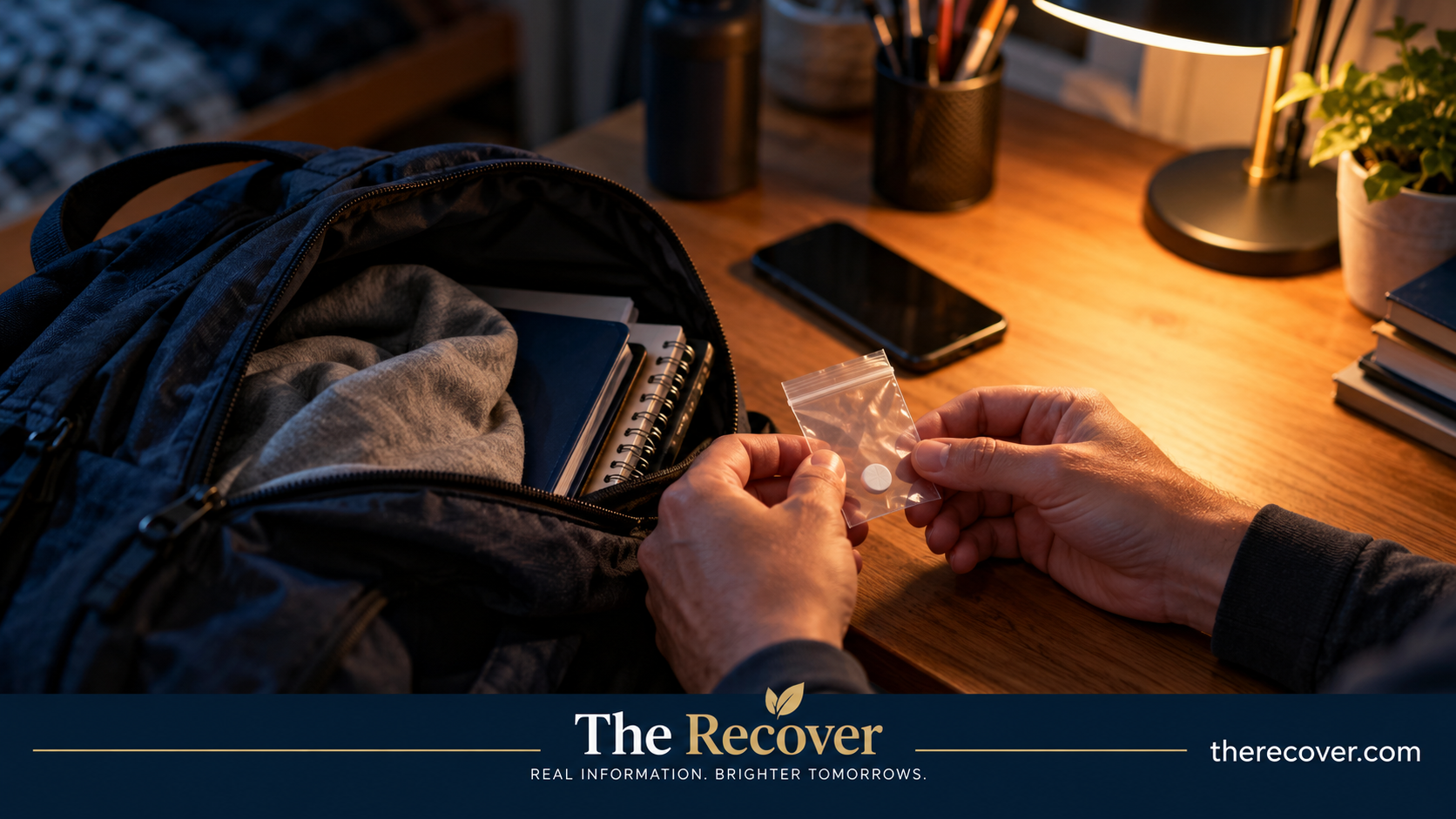
Found Pills in Your Teen’s Room? What to Do Next
By The Recover Editorial Team · Published October 21, 2026
Finding a pill you don’t recognize in your teenager’s room tends to set off two reactions at once: fear about what it is, and dread about the conversation that comes next. Both are reasonable. A loose tablet ten years ago was most likely a borrowed prescription. Today, a pill that didn’t come from a pharmacy can be a counterfeit made to look exactly like a real medication, and some of those counterfeits contain fentanyl.
This guide walks through what to do in order: how to tell whether anyone is in danger right now, how to handle and identify the pill, what the latest data says about counterfeit pills and teens, how to talk with your teen without shutting the conversation down, and when it makes sense to bring in a professional.
| The short versionIf your teen is hard to wake, breathing slowly, or has blue or gray lips: call 911, give naloxone (Narcan) if you have it, and stay with them. Don’t wait to identify the pill first.If everyone is okay: put the pill somewhere safe, photograph both sides, look up the imprint, and assume any pill that didn’t come from a pharmacy could contain fentanyl no matter what it looks like.Then: talk with your teen when you are both calm, keep naloxone in the house, and get a professional assessment if the pill points to a pattern rather than a one-time thing. |
Step 1: Check Whether Anyone Is in Danger Right Now
Before anything else, find your teen and see how they are doing. The pill matters less than whether someone has already taken one.
Signs of an opioid overdose, including fentanyl, include:
- Slow, shallow, or stopped breathing, or gurgling and snoring sounds
- Blue or gray lips and fingertips
- Pinpoint pupils
- Limp body, or being unable to wake up or speak
- Cold, clammy skin
If you see any of these, call 911 and give naloxone if it is in the house. Naloxone nasal spray has been sold over the counter since the FDA approved it in 2023, and it does not hurt someone who hasn’t taken an opioid. Our guide to the signs of fentanyl overdose and what to do immediately covers rescue breathing, recovery position, and when to give a second dose.
One complication worth knowing: counterfeit “Xanax” bars often contain bromazolam, a benzodiazepine that the DEA flagged in a November 2025 warning alongside nitazenes, a class of synthetic opioids. Naloxone does not reverse benzodiazepines, but these pills frequently contain fentanyl too, so naloxone is still the right first move while you wait for help.
Many parents hesitate to call 911 because they worry about police involvement. Most states have overdose Good Samaritan laws that give limited legal protection to people who call for help. A federal GAO review found 47 states and Washington, D.C., had them, though the protections differ from state to state. Our explainer on Good Samaritan laws and calling 911 safely goes into the details. In a true emergency, the call is always the right one.
If no one is in danger but you think your teen may have swallowed something, the national Poison Help line at 1-800-222-1222 is free, confidential, and staffed around the clock by specialists who can tell you whether to watch at home or go to the ER.
Step 2: Secure the Pill Without Panicking About Touching It
You don’t need a hazmat suit. The American College of Medical Toxicology and the American Academy of Clinical Toxicology have concluded that incidental skin contact is unlikely to cause opioid toxicity. Wash your hands with soap and water afterward. Public health agencies advise skipping hand sanitizer, which can increase absorption, and not touching your eyes or mouth until you’ve washed.
Then:
- Use gloves or a folded paper towel if you have them, and put the pill in a sealed bag or container.
- Photograph both sides in good light, close enough to read any letters or numbers.
- Write down where you found it, how many there were, and what it was stored in. A plain baggie, a vitamin bottle, or a pill with no packaging tells you something different than a pharmacy bottle with a family member’s name on it.
- Check your own medicine cabinet. Count any prescriptions in the house, especially pain medicine, ADHD medication, and anxiety or sleep medication.
- Store it out of reach of younger children and pets until you decide what to do with it.
Don’t taste it, crush it, or flush it yet. You may want it identified, and flushing an unknown substance is not a safe disposal method.
Step 3: Identify the Pill, Then Don’t Fully Trust the Match
Most legitimate tablets and capsules carry an imprint code, a combination of letters and numbers stamped into the surface. You can enter that code, plus the color and shape, into a pill identifier. The poison center network runs a free webPOISONCONTROL pill identifier that lists “what’s this pill I found in my teen’s pocket?” as one of its main uses. Any pharmacist can also look up an imprint for you.
The Recover maintains identification guides for several of the pills parents search for most often, including the IP 204 pill (oxycodone and acetaminophen), the M523 pill, and the M366 pill (hydrocodone and acetaminophen). Each one explains what the real medication is, how it is misused, and what treatment looks like if misuse has turned into dependence.
Here is the catch. A match tells you what the pill is supposed to be. It does not tell you what is actually inside. According to the DEA, drug traffickers use pill presses with custom punches and dies to stamp counterfeit tablets with the same markings as oxycodone, Xanax, and Adderall. A blue round pill stamped “M 30” can be real oxycodone or a fentanyl counterfeit, and you cannot tell the difference by looking.
A pill with no imprint at all is a stronger warning sign. Nearly all FDA-approved prescription and over-the-counter tablets carry one. Unmarked pills may be supplements, but they may also be pressed counterfeits or illicit products.
If the pill turns out to be a kratom or 7-OH tablet, which are sold in smoke shops and online, see our guide on how to identify 7-OH pills and kratom products.
Pills Parents Commonly Find and What They May Really Be
| What it looks like | What it imitates | What counterfeits often contain |
|---|---|---|
| Small blue round tablet stamped “M” and “30” (“blues,” “M30s”) | Oxycodone 30 mg | Fentanyl. This is the most commonly counterfeited pill. |
| Rectangular bar, often white, yellow, or green, scored into sections | Xanax (alprazolam) | Bromazolam or other unapproved benzodiazepines, sometimes with fentanyl |
| Orange or blue round or oval tablet | Adderall (amphetamine) | Methamphetamine |
| White oval tablet with an imprint such as M523 or IP 204 | Percocet-type oxycodone and acetaminophen | Fentanyl, if not from a pharmacy |
| Pharmacy bottle with a family member’s name | A real prescription | Usually the real medication, but still misuse |
| Tablet with no imprint, or a bright color or novelty shape | Supplements or “pressies” | Unknown. Treat as possibly containing fentanyl. |
Why a Found Pill Means Something Different Than It Used To
The concern with counterfeit pills is not hypothetical. In 2025, the DEA seized more than 47 million fentanyl-laced fake pills. When its laboratory tests seized pills, it measures how many contain at least 2 milligrams of fentanyl, roughly the amount that fits on the tip of a pencil and an amount the agency considers potentially deadly. That share has fallen, from 7 in 10 pills in 2023 to 5 in 10 in 2024 and 29 percent in 2025. It is still more than one in four.
Teens are exposed to this market in a specific way. A CDC analysis of adolescent overdose deaths from mid-2019 through 2021 found that about 84 percent involved illicitly made fentanyl and roughly a quarter had evidence of counterfeit pills at the scene. The researchers noted it was unclear whether the teens knew the pills were fake or thought they were taking real medication. Many teens who die this way were not using fentanyl on purpose. They took what they believed was a Percocet, a Xanax, or a study pill.
There is also real reason for perspective. Teen overdose deaths fell by about 40 percent in 2024, and the latest Monitoring the Future survey found that 91 percent of eighth graders, 82 percent of tenth graders, and 66 percent of twelfth graders had not used alcohol, marijuana, or nicotine in the past month. Most teens are not using drugs, and one pill in a drawer does not mean your child has an addiction. It does mean the pill deserves to be taken seriously and talked about.
Step 4: Decide Whether to Test or Simply Dispose of It
Fentanyl test strips can detect fentanyl in a crushed pill dissolved in water. They are cheap, and in many states they are now legal to buy and carry. They have real limits for a parent, though:
- They show whether fentanyl is present, not how much.
- Fentanyl is often spread unevenly through a batch, so one test does not clear a whole bag.
- They do not detect bromazolam, xylazine, or many nitazenes.
- A negative result does not make a pill safe to take, and legality varies by state.
For most parents, the more useful assumption is the simple one: any pill that did not come from a pharmacy with your teen’s name on it could contain fentanyl. Testing can still help start a conversation (“this is what was in it”), but it should not be what decides whether the situation is serious.
When you are ready to get rid of it, use a pharmacy drug take-back kiosk or a DEA Take Back Day collection site. Do not keep it around “just in case.” Whether to involve police or the school is a family decision. Some parents report pills bought through social media to the DEA’s tip line, particularly if they suspect the seller is targeting other kids.
Step 5: Talk With Your Teen, Calmly and on Purpose
The conversation matters more than the pill. How it goes will shape whether your teen comes to you the next time they are offered something, or the next time a friend is in trouble.
Pick the Moment
Wait until you are calm and your teen is sober and rested. Late at night, right after you’ve found the pill, or in front of siblings are the hardest times to have a productive talk. If two parents or caregivers are involved, agree beforehand on what you want to learn and what happens next.
Open With Concern, Not Evidence
Lead with why you care rather than with an accusation. A few ways to start:
- “I found this in your room, and I’m scared because of what’s going around in fake pills right now. I want to understand what’s going on.”
- “You’re not in trouble for telling me the truth. I need to know if you’ve taken any of these, because some of them can kill people.”
- “Did someone give this to you, or did you buy it? I’m asking because I want to know how it got here, not to punish anyone.”
Listen for the Why
Teens rarely take pills for no reason. Pay attention to what sits underneath the answer. A teen using pills to sleep, to calm panic, to focus during exams, or to numb something painful is telling you about a need, and that need will still be there after the pill is gone. Ask what the pill was supposed to do for them.
Share the Facts, Briefly
Explain counterfeit pills plainly: pills bought online, through social media, or handed over by friends can look exactly like a real prescription and still contain fentanyl. Ask them to never take a pill that wasn’t prescribed to them, and to call you, or 911, if a friend ever becomes hard to wake, with no punishment for making that call.
What to Avoid
- Calling them an addict or predicting the worst. Labels push teens toward hiding.
- Secretly drug testing them. The American Academy of Pediatrics opposes testing adolescents without their knowledge and consent and suggests involving the teen’s doctor instead.
- Making consequences the whole conversation. Boundaries matter, but if punishment is the only outcome, the next pill will simply be better hidden.
- Treating one talk as the end of it. Plan to check in again over the following days and weeks.
Is This a One-Time Thing or a Pattern?
A single pill, an honest conversation, and no other changes may be exactly what it looks like: curiosity, peer pressure, or a bad decision. It is still worth watching. These signs suggest something more:
- More pills, pill bottles, small baggies, foil with burn marks, or cut straws
- Missing prescription medication, cash, or valuables in the house
- Changes in sleep, appetite, grades, or friend groups, or dropping activities they used to care about
- Secrecy around phones and new accounts or contacts you don’t recognize
- Nodding off, slurred speech, unusual drowsiness, or stretches of irritability and sickness that look like withdrawal
- Use of other substances. Nicotine is often the first, and vaping in teens frequently runs alongside anxiety.
Our guide to recognizing the signs of drug addiction in teenagers goes into each of these in more depth. If several fit, or if your teen admits to regular use, the next step is a professional assessment rather than another conversation at the kitchen table.
Pills are also often a sign of untreated anxiety, depression, trauma, or ADHD. If your teen tells you they were self-medicating, the mental health piece needs attention as much as the substance use. Our parents’ guide to teen mental health treatment programs explains the options.
Step 6: Get a Professional Assessment When You Need One
A good first call is usually your teen’s pediatrician or family doctor, who can screen for substance use, check for medical concerns, and refer you to an adolescent specialist. From there, a licensed clinician can recommend the right level of care. For many teens, that is outpatient counseling. Others need an intensive outpatient program, a day program, or residential care.
Adolescent treatment is different from adult rehab. Good programs work around school, include the family, and treat any co-occurring mental health condition at the same time. Our overview of teen treatment programs and our guide on finding the right teen rehab explain what to look for and what questions to ask.
If your teen refuses help and you are seeing signs of regular use, a structured family conversation guided by a professional can make a difference. Our step-by-step intervention guide explains how families prepare for one.
Make Your Home Safer This Week
- Keep naloxone at home where everyone, including your teen, knows where it is. It is sold over the counter at most pharmacies.
- Lock up prescriptions and count pills you keep, especially opioids, stimulants, and benzodiazepines.
- Clear out old medication through a take-back kiosk.
- Talk with siblings, too. Younger children in the house can find the same pills.
- Know the numbers: 911 for emergencies, 1-800-222-1222 for Poison Help, 988 for a mental health or suicide crisis, and SAMHSA’s National Helpline at 1-800-662-4357 for treatment referrals.
Our fentanyl hub page covers how fentanyl works, overdose response, and treatment for families who want the full picture.
Frequently Asked Questions
Can I overdose just by touching a pill that might contain fentanyl?
No. Medical toxicology groups have concluded that brief skin contact is not expected to cause an overdose. Wash your hands with soap and water afterward, skip hand sanitizer, and avoid touching your eyes or mouth until you do.
If the imprint matches a real medication, is the pill safe?
Not necessarily. Counterfeiters copy imprints exactly. A match tells you what the pill is meant to look like, not what is in it. Unless it came from a pharmacy with your teen’s name on the label, treat it as unknown.
Should I call poison control to identify a pill?
Call 1-800-222-1222 if you think someone may have swallowed it or you are unsure whether to go to the ER. If you only need to know what the pill is, an online pill identifier or a pharmacist is faster.
Will calling 911 get my teen arrested?
Most states have overdose Good Samaritan laws that offer some protection to people who call for help, but the details vary by state. In a medical emergency, calling is always the right choice.
Should I drug test my teen at home?
The American Academy of Pediatrics advises against testing teens without their knowledge and consent, and recommends working with your teen’s doctor if testing seems necessary. Home tests also miss many substances, including bromazolam and some synthetic opioids.
Does finding one pill mean my teen is addicted?
No. Most teens who try a substance do not develop a substance use disorder. A single pill is a reason for a serious conversation and closer attention, not a diagnosis. Repeated use, other substances, or behavior changes are what point toward a professional assessment.
Where can I get naloxone?
Naloxone nasal spray is sold over the counter at most pharmacies and online. Many health departments and community organizations give it out free.
Help Is Available When You’re Ready
Finding a pill is frightening, but it is also an opening: a chance to learn what your teen is dealing with and to step in early. If you would like help understanding treatment options for your teen, including levels of care and insurance coverage, The Recover’s referral line at 888-510-3898 can talk it through with you confidentially. The Recover is an educational publisher and referral network, not a treatment provider.
| Key takeawaysCheck on your teen first. Overdose signs mean calling 911 and giving naloxone right away.Fentanyl does not cause an overdose through brief skin contact. Bag the pill, photograph it, and wash your hands.A pill identifier tells you what a pill is supposed to be, not what it contains. Counterfeits copy imprints exactly.Any pill not from a pharmacy could contain fentanyl. In 2025, DEA testing found a potentially deadly dose in 29 percent of fake pills.Talk with your teen calmly, listen for the reason behind the pill, and get a professional assessment if you see a pattern. |
Sources
- U.S. Drug Enforcement Administration, Pill Press Resources
- U.S. Drug Enforcement Administration, Operation Engage: Seattle (2025 laboratory testing figures)
- DEA Get Smart About Drugs, DEA Warns of Threat Posed by Nitazenes and Bromazolam (November 2025)
- Tanz LJ, Dinwiddie AT, Mattson CL, et al. Drug Overdose Deaths Among Persons Aged 10–19 Years — United States, July 2019–December 2021. MMWR, December 2022
- National Institutes of Health, Reported Use of Most Drugs Remains Low Among U.S. Teens (Monitoring the Future 2025)
- NPR via GPB, Drug Deaths Plummet Among Young Americans as Fentanyl Carnage Eases (June 2025)
- U.S. Food and Drug Administration, FDA Approves First Over-the-Counter Naloxone Nasal Spray (March 2023)
- Moss MJ, et al. ACMT and AACT Position Statement: Preventing Occupational Fentanyl and Fentanyl Analog Exposure to Emergency Responders. J Med Toxicol, 2017
- U.S. Government Accountability Office, Drug Misuse: Most States Have Good Samaritan Laws (GAO-21-248)
- American Academy of Pediatrics, Testing for Drugs of Abuse in Children and Adolescents: Addendum, Pediatrics 2007
- HRSA Poison Help, The Poison Help Line
- webPOISONCONTROL, Pill Identifier
- U.S. Drug Enforcement Administration, National Prescription Drug Take Back Day
Medical disclaimer: This article is for educational purposes and is not a substitute for medical advice, diagnosis, or treatment. If someone may be overdosing, call 911. For a mental health or suicide crisis, call or text 988. The Recover is an educational publisher and treatment referral network and does not provide medical care.


