7-OH Pills, Tablets and Shots: How to Identify Gas Station Kratom Products (2026)
By The Recover Editorial Team · Updated September 30, 2026
Quick answer: Gas station 7-OH products usually come as small pressed tablets, liquid shots, gummies, or dissolving strips in bright retail packaging labeled “7-OH,” “7-hydroxy,” or “7-hydroxymitragynine,” often described as a natural kratom extract. They typically have no pharmacy imprint, so online pill identifiers won’t recognize them. Some contain synthetic compounds that became federally illegal in August 2026. If you find them, check that the person is safe, photograph the label, and call Poison Control at 1-800-222-1222 with questions.
Interest in these products spiked after investigators found packaged kratom products at the scenes of two University of Mississippi student deaths in September 2026. This guide is for parents, partners, and anyone who has found a pill or package and wants to know what it is and what to do.
Emergency: If someone is unresponsive, breathing very slowly, or has blue lips, call 911. 7-OH acts on the body’s opioid receptors, so naloxone (Narcan) may help; give it if you have it and stay with the person. More help: emergency addiction resources.
Why Pill Identifier Tools Usually Can’t Find 7-OH
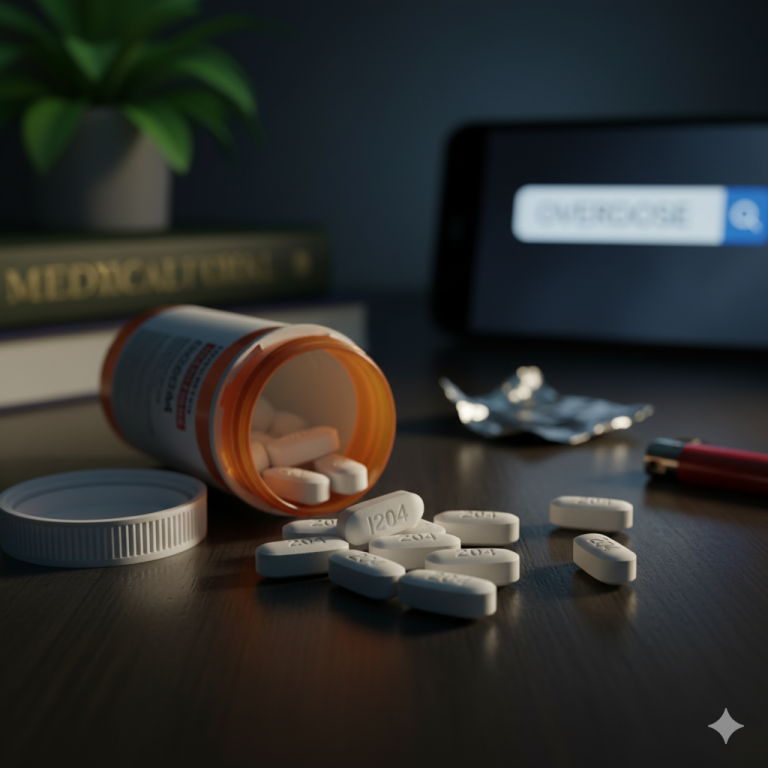
Prescription and over-the-counter pills sold in the U.S. carry an imprint code, a combination of letters, numbers, and shape that pill identifier databases match to an approved medication. 7-OH is not an approved drug. The FDA has warned that it is not a lawful dietary supplement or food ingredient and has not been proven safe or effective for any use.
Because these tablets are not approved medications, they generally have no registered imprint. A search by shape or color will either return nothing or suggest the wrong pill. With 7-OH, the package is usually the best evidence you have, so hold on to it (or a photo of it) before throwing anything away.
What 7-OH Products Look Like
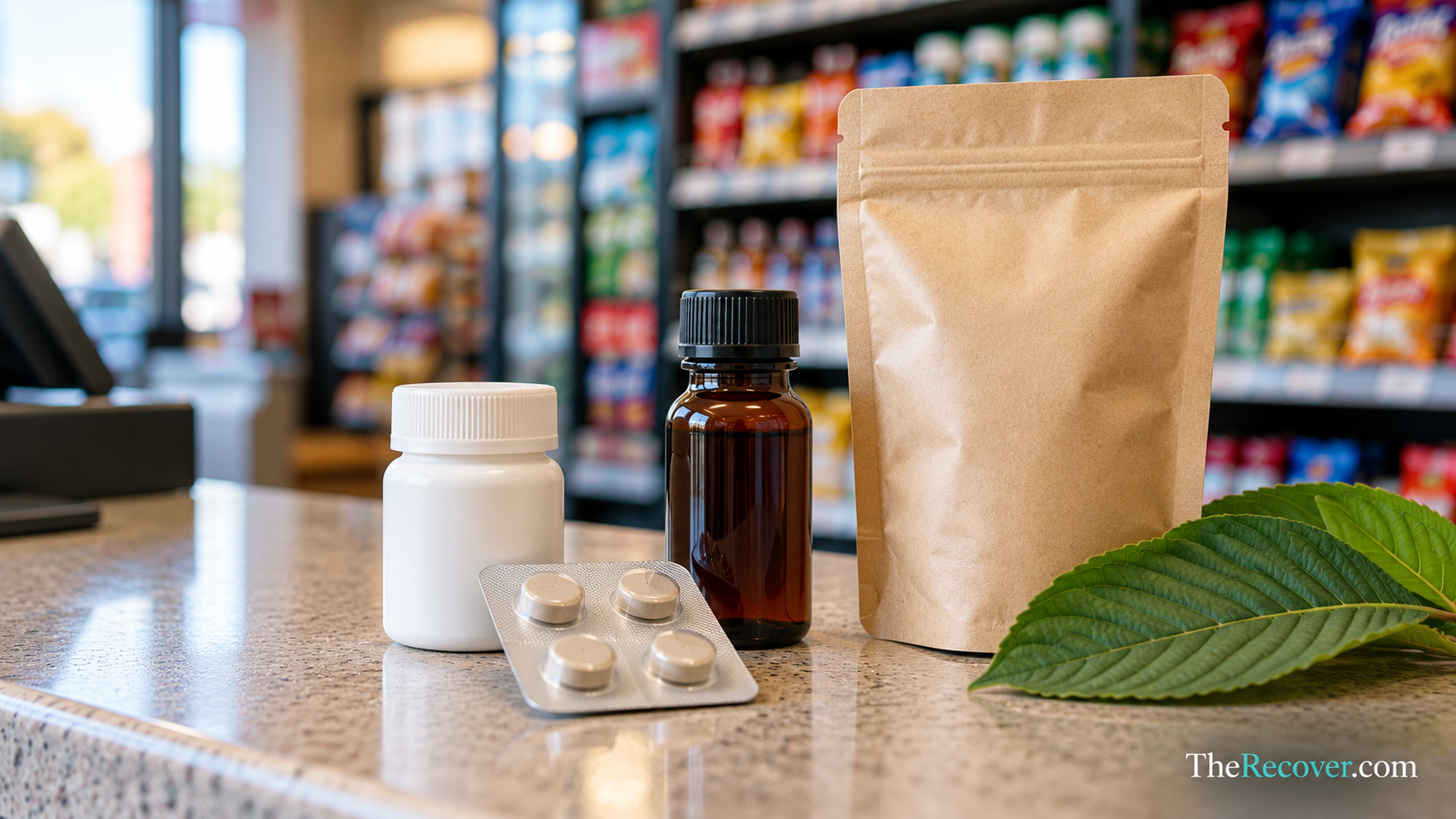
According to the DEA’s July 2026 scheduling notice, 7-OH is sold in smoke shops, gas stations, and online in many forms, usually in colorful packaging with names built around “7-OH” or “7-hydroxy.” One study cited by the DEA found chewable and under-the-tongue tablets were the most common format.
| Form | What you might find | Worth knowing |
| Tablets | Small pressed pills, sometimes scored, in a blister pack, small bottle, or foil packet | Most common format; dose per tablet varies widely between brands |
| Sublingual strips or pouches | Thin films or small pouches meant to dissolve in the mouth | Designed for fast absorption |
| Liquid shots | Small single-serving bottles, similar in size to energy shots | Often sold near the register |
| Gummies and chewables | Candy-like pieces in retail packaging | The FDA has flagged gummy packaging as appealing to children |
| Powders and capsules | Loose powder or capsules labeled as extract or “enhanced” kratom | Harder to tell apart from plain kratom leaf powder |
| Syrups, vapes, nasal sprays | Less common formats also listed by the DEA | Same active compounds in a different delivery form |
The dose inside is a major concern. The DEA notes that one review of the market found 7-OH content ranging from 1 mg to 700 mg per serving. Retail packages typically sell for about $15 to $40, and the average cost works out to roughly $4 per dose, which makes repeat purchases easy.
Words on the Label to Watch For
Manufacturers change names and formulas often, so no list is complete. These terms are the most useful signals:
- 7-OH, 7-hydroxy, 7-hydroxymitragynine, or 7-OHMG: concentrated or semi-synthetic 7-OH.
- “Pseudo,” MGPI, or mitragynine pseudoindoxyl: a more potent relative of 7-OH, federally Schedule I since August 26, 2026.
- MGM-15 or MGM-16: synthetic derivatives, also Schedule I since August 26, 2026.
- “Enhanced kratom,” “extract,” “concentrate”: processed products that may contain far more 7-OH than the plant. See our page on OPMS Black, a concentrated kratom product.
- Brand names built on “7-OH”: in 2025 the FDA sent warning letters to seven companies marketing 7-OH, including sellers of products branded 7OHMZ and Hydroxie.
Labels can also mislead. A package seized in the Ole Miss investigation, described in court records, was labeled “Smax, Pseudo-DBM” tablets and listed mitragynine pseudoindoxyl, MGM-15, and 7-OH among its ingredients, according to ABC News. Nothing about the name tells a buyer it contains a now-controlled substance.
Which Kratom Products Are Illegal in 2026?
| Compound | Federal status as of September 30, 2026 |
| Kratom leaf (Mitragyna speciosa) | Not federally controlled; banned or restricted in some states and cities |
| 7-OH above a set threshold | Proposed temporary Schedule I (more than 0.050% by weight, or more than 1 mg per item in synthetic or processed products); order not yet issued |
| Mitragynine pseudoindoxyl, MGM-15, MGM-16 | Schedule I since August 26, 2026, for at least two years |
State rules add another layer. Mississippi limits kratom sales to adults 21 and older, bans synthetic kratom products, and caps 7-OH content, and dozens of Mississippi cities and counties ban kratom outright. California treats kratom and 7-OH products sold for consumption as illegal to sell and reported removing 7,888 of them from store shelves by September 2026. For a state-by-state overview, see our Ultimate Guide to Kratom.
What Investigators Found in the Ole Miss Cases
Two University of Mississippi students died in separate incidents on September 21, 2026. Investigators said packaged kratom products bought at a retail store were found in both cases. As of September 30, toxicology results were still pending, and authorities had not confirmed that kratom or any other substance contributed to either death.
A criminal affidavit identified two nearby stores where investigators believe the products were bought. Two employees of one store were charged with possessing Schedule I substances with intent to distribute; police said those arrests had not been officially linked to the deaths.
The case also shows why these products are hard to track. A former toxicology lab owner told Action News 5 that manufacturers reformulate often, and that labs generally need to know which compound they are looking for before their equipment can identify it.
Will 7-OH Show Up on a Drug Test?
Most standard drug panels are built to detect common drugs such as opioids, amphetamines, cocaine, and THC, and are not designed to detect kratom alkaloids. Detecting kratom usually requires a specific test, and newer synthetic compounds may not be recognized until labs add them to their methods. A negative result on a standard panel does not rule out 7-OH use. Our kratom drug test guide covers detection in more detail.
You Found Pills or Packaging: What to Do Next
- Check on the person first. If they are hard to wake, confused, breathing slowly, or not breathing, call 911 and give naloxone if you have it.
- Don’t taste or take anything to “test” it. The dose and contents of these products are unpredictable.
- Photograph the package, front and back, including the ingredient list and any batch or lot number. That is the most useful information for Poison Control, a doctor, or a treatment provider.
- Call Poison Control at 1-800-222-1222 or use poison.org if you have questions about what the product is or whether someone who took it needs care.
- Dispose of it safely. Use a pharmacy drop-off box or a DEA take-back location rather than leaving it in a trash can where someone could retrieve it.
- Wait for a calm moment to talk. Start with what you found and that you are worried, not with accusations. Our guide to helping a loved one has conversation tips.
Signs Someone May Be Using 7-OH
- Frequent trips to gas stations or smoke shops, or small receipts from them
- Swings between energetic and talkative and very drowsy or “nodding off”
- Constricted pupils, constipation, itching, or nausea
- Irritability, sweating, aches, runny nose, or poor sleep when they go without it
- Needing to take it several times a day, or moving from leaf powder to tablets or shots
- Unexplained spending, or defensiveness about where money is going
Several of these overlap with other opioid use. Our opioid addiction guide explains the broader warning signs.
When 7-OH Use Becomes Dependence
The DEA describes 7-OH as having a pharmacological profile similar to morphine, with the same core risks: tolerance, physical dependence, and slowed breathing at high doses. Federal data show 7-OH turning up in serious poisonings and fatal overdoses, often alongside fentanyl, benzodiazepines, or alcohol. NIDA notes that deaths from kratom leaf alone appear rare and usually involve other substances.
People who use 7-OH daily often find it hard to stop because withdrawal can resemble opioid withdrawal. Stopping heavy daily use is best planned with a medical provider. Treatment options are similar to those for other opioids, from medically supervised detox to outpatient care. Our guide to what to expect in detox walks through the process, and dual diagnosis programs help when 7-OH use started as a way to manage pain, anxiety, or depression. When a spouse or partner is also affected, couples rehab is an option.
To talk through treatment options, call The Recover at (888) 510-3898. For free, confidential referrals any time, the SAMHSA National Helpline is available 24/7 at 1-800-662-4357.
Related Kratom Guides
- Ultimate Guide to Kratom: Uses, Effects, Legality & Safety
- What Is Kratom (Mitragyna speciosa)?
- Kratom and Liver Damage: FAQ, Symptoms, and Warnings
- Does Kratom Show Up on a Drug Test?
Frequently Asked Questions
What does a 7-OH pill look like?
Most 7-OH tablets are small pressed pills, often chewable or made to dissolve under the tongue, sold in brightly colored retail packaging rather than pharmacy bottles. They usually carry no pharmacy imprint code. The package is often labeled 7-OH, 7-hydroxy, or 7-hydroxymitragynine, and may describe the contents as a natural kratom extract.
Can a pill identifier tell me if a pill is 7-OH?
Usually not. Pill identifier tools match imprint codes to FDA-approved medications, and 7-OH is not an approved drug, so these tablets generally will not appear. The packaging is the best clue. If you only have a loose pill, Poison Control (1-800-222-1222) can help you figure out next steps.
Is 7-OH illegal now?
Partly. Three synthetic 7-OH relatives, mitragynine pseudoindoxyl, MGM-15, and MGM-16, became federally Schedule I on August 26, 2026. A federal order covering 7-OH itself above a set concentration was proposed in July 2026 but had not been issued as of September 30, 2026. Many states and cities restrict or ban 7-OH or kratom, and California treats kratom and 7-OH products sold for consumption as illegal to sell.
Will 7-OH show up on a standard drug test?
Most standard drug panels are not designed to detect kratom alkaloids, so a specific kratom test is usually needed. Newer synthetic compounds can be harder still, because a lab generally has to know what it is looking for before it can identify it.
What should I do if I find 7-OH pills in my teen’s or partner’s room?
First make sure the person is safe. If anyone is hard to wake, breathing slowly, or not breathing, call 911 and give naloxone if you have it. Otherwise, photograph the packaging, call Poison Control if you have questions about what it is, dispose of the product through a drug take-back site, and plan a calm conversation for when the person is sober.
This article is for general information and is not medical advice. The Recover is a behavioral health referral network and editorial publication. Information about the Ole Miss investigation reflects public reports as of September 30, 2026, and will be updated as findings are released. See our editorial standards.
Sources
- Drug Enforcement Administration, Temporary Placement of 7-Hydroxymitragynine Above a Specified Threshold in Schedule I (notice of intent), 91 FR 40917, July 6, 2026
- Drug Enforcement Administration, Temporary Placement of Mitragynine Pseudoindoxyl, MGM-15, and MGM-16 in Schedule I (temporary order), effective August 26, 2026
- U.S. Food and Drug Administration, FDA Issues Warning Letters to Firms Marketing Products Containing 7-Hydroxymitragynine
- National Institute on Drug Abuse, Kratom
- Mississippi Department of Revenue, Notice 72-25-12: Kratom Products
- Office of the Governor of California, enforcement update on kratom and 7-OH products, September 2, 2026
- ABC News, Ole Miss deaths may be connected to 2 stores allegedly selling kratom products, September 29, 2026
- NBC News, Kratom found at locations where two Ole Miss students were discovered dead, September 23, 2026
- Action News 5, Toxicology expert raises concerns about kratom testing after Ole Miss student deaths, September 24, 2026
- America’s Poison Centers / Poison Control