
Lemon Tek Explained: The Ultimate Guide to the Method, Effects, and Safety
Lemon Tek Explained: The Ultimate Guide to the Method, Effects, and Safety
The world of psychedelic research and harm reduction has witnessed a renaissance in recent years, with ancient practices gaining renewed scientific attention. Among these traditional methods, lemon tek has emerged as one of the most discussed preparation techniques for psilocybin mushrooms. As awareness grows around psychedelic-assisted therapy and responsible use practices, understanding the nuances of consumption methods becomes increasingly vital for both therapeutic applications and harm reduction.
The lemon tek method represents more than just a consumption technique—it’s a bridge between traditional indigenous wisdom and modern understanding of psychedelic pharmacology. This comprehensive guide examines every aspect of lemon tekking, from its biochemical mechanisms to practical safety considerations, providing the evidence-based information necessary for informed decision-making.
Understanding the Lemon Tek Method
What is Lemon Tek?
Lemon tek, also known as lemon tekking or simply “lemontek,” is a preparation method where finely ground psilocybin mushrooms are soaked in fresh lemon juice before consumption. This technique has gained significant attention within psychedelic communities for its reported ability to intensify effects while reducing onset time and overall trip duration.
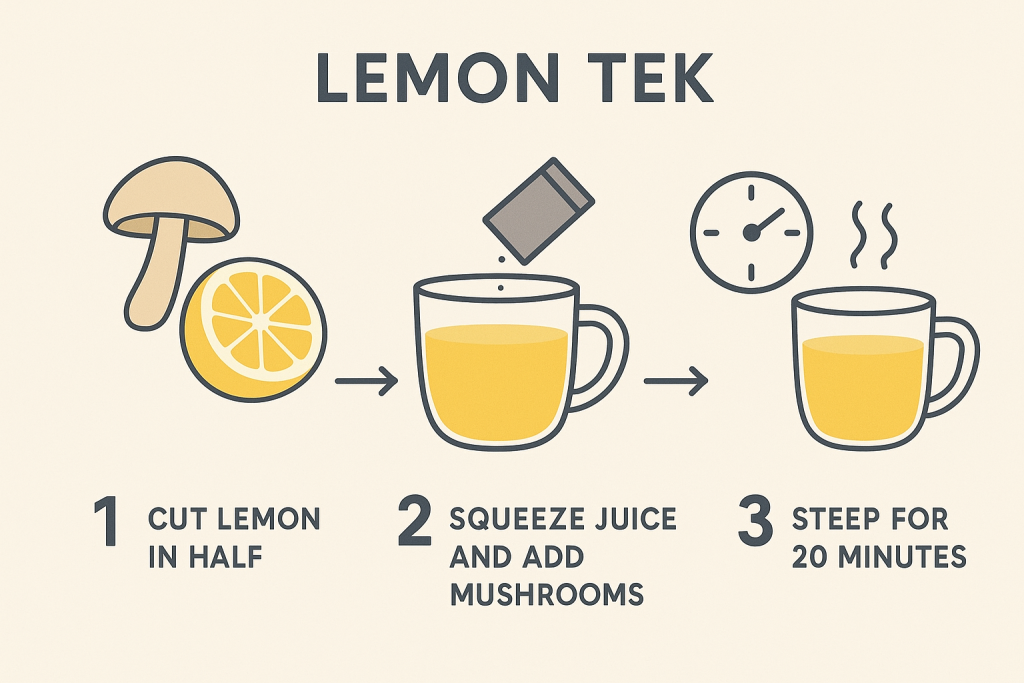
The method involves breaking down the mushroom material into the finest powder possible, typically using a coffee grinder or mortar and pestle, then combining this powder with fresh lemon juice. The mixture is allowed to sit for 15-20 minutes before consumption, during which time the acidic environment begins pre-converting psilocybin into its active form, psilocin.
The Science Behind Lemon Tekking
The effectiveness of the lemon tek method lies in basic biochemistry. Psilocybin mushrooms contain psilocybin, a prodrug that must be converted into psilocin to produce psychoactive effects. This conversion typically occurs in the acidic environment of the human stomach, where enzymes and gastric acid facilitate the transformation.
Lemon juice, with its pH of approximately 2.0, creates an acidic environment similar to stomach acid. When mushroom powder is soaked in lemon juice, this acid begins the conversion process outside the body. The citric acid and low pH effectively start breaking down the psilocybin into psilocin before ingestion, potentially explaining why many users report faster onset times and more intense initial effects.
Research into psilocybin metabolism shows that the conversion from psilocybin to psilocin involves dephosphorylation, a process that can be influenced by acidic conditions. While formal studies specifically examining lemon tek are limited, the biochemical principles supporting the method align with established pharmacological understanding.
The Step-by-Step Lemon Tek Process
Preparation and Materials
Creating an effective lemon tek requires careful attention to both materials and technique. The quality of ingredients directly impacts both safety and effectiveness. Fresh lemons provide optimal acidity and enzymatic activity compared to bottled alternatives, which may contain preservatives that could interfere with the conversion process.
Essential materials include:
- High-quality, properly identified psilocybin mushrooms
- Fresh lemons (organic when possible)
- Coffee grinder or high-quality mortar and pestle
- Fine mesh strainer
- Glass or ceramic bowl (avoid metal containers)
- Accurate scale capable of measuring milligrams
Detailed Preparation Method
The lemon tek method requires precision and patience. Begin by ensuring all equipment is clean and dry. Weigh your mushroom material carefully, as the intensified effects of lemon tekking may require dosage adjustments compared to traditional consumption methods.
Grind the dried mushrooms into the finest powder possible. The surface area exposed to the acidic lemon juice directly correlates with the effectiveness of the conversion process. A coffee grinder typically produces the most consistent, fine powder, though a mortar and pestle can work with sufficient patience and technique.
Cut fresh lemons and extract juice immediately before use. The amount of lemon juice needed varies based on mushroom quantity, but generally, one to two tablespoons sufficiently cover most personal doses. Pour the fresh lemon juice over the mushroom powder, ensuring complete saturation.
Allow the mixture to sit for 15-20 minutes, stirring occasionally. Some practitioners extend this time to 30 minutes, though excessive soaking may begin breaking down other compounds. The mixture should develop a slightly darker color as the conversion process progresses.
Lemon Tek Effects and Duration
Onset and Intensity Differences
Users consistently report that lemon tek mushrooms produce effects more rapidly than traditional consumption methods. Where eating whole or ground mushrooms might take 30-90 minutes to produce noticeable effects, lemon tekking often reduces this to 15-45 minutes. This accelerated onset appears linked to the pre-conversion of psilocybin to psilocin.
The intensity of effects also differs significantly. Many users describe lemon tek effects as more pronounced during the initial phases, with a steeper “come-up” curve. This intensification likely results from the body receiving psilocin in a more readily available form, rather than needing to complete the conversion process internally.
However, this increased intensity comes with trade-offs. The overall duration of lemon tek experiences typically runs shorter than traditional consumption, often lasting 4-6 hours compared to 6-8 hours for whole mushrooms. The peak effects may be more concentrated into the first 2-3 hours of the experience.
Comparing Lemon Tek vs Eating Mushrooms
The fundamental difference between lemon tek and eating mushrooms lies in the conversion timing and digestive requirements. Traditional mushroom consumption relies on gastric acid and digestive enzymes to convert psilocybin to psilocin over time, creating a more gradual onset and sustained experience.
Lemon tek essentially front-loads this conversion process, potentially explaining why users report:
- Faster onset (15-45 minutes vs 30-90 minutes)
- More intense initial effects
- Shorter overall duration
- Potentially reduced gastrointestinal discomfort
- More predictable timing
These differences make lemon tekking appealing for those seeking more controlled timing or who experience digestive issues with whole mushrooms. However, the intensified effects also increase the importance of proper set, setting, and dosage considerations.
Dosage Considerations for Lemon Tek
Adjusting Standard Doses
The intensified effects of lemon tek mushrooms necessitate careful dosage recalibration. Many experienced users recommend reducing standard doses by 10-25% when using the lemon tek method, though individual responses vary significantly. This reduction accounts for the potentially increased bioavailability and concentrated onset of effects.
For those new to psychedelics, starting with even smaller amounts becomes crucial when using lemon tek. The accelerated onset leaves less time for dosage adjustment decisions, making conservative initial doses essential for safety. A microdose that might be barely noticeable when eating whole mushrooms could produce more pronounced effects when lemon tekked.
Factors Affecting Lemon Tek Dosage
Several variables influence appropriate lemon tek dosage beyond simple weight calculations. Individual metabolism, previous experience with psychedelics, body weight, medications, and even genetic factors affecting serotonin receptor sensitivity all play roles in determining optimal dosage.
The specific mushroom strain and its psilocybin content significantly impact dosage calculations. Potency can vary dramatically between different varieties and even individual batches of the same strain. This variability underscores the importance of starting with conservative doses, especially when trying new mushroom sources.
Environmental factors also influence effective dosage. The same amount of lemon tekked mushrooms might produce different effects depending on the user’s mental state, physical condition, recent food intake, and setting. These variables make standardized dosage recommendations challenging and emphasize the need for individualized approaches.
Safety Considerations and Risk Reduction
Understanding Potential Risks
While lemon tek offers certain advantages, it also introduces unique safety considerations. The intensified and accelerated effects can be overwhelming for unprepared users, particularly those accustomed to the gentler onset of whole mushrooms. This rapid escalation leaves limited time for mental adjustment or decision-making once effects begin.
The concentrated nature of lemon tek effects may increase the risk of psychological distress, anxiety, or panic reactions, especially in inappropriate settings or with higher doses. The faster onset also means less time to implement harm reduction strategies if the experience begins moving in an uncomfortable direction.
Physical safety considerations include the potential for more intense nausea during the initial phases, though many users report overall reduced gastrointestinal distress with lemon tek. The acidic nature of the preparation may also cause stomach irritation in sensitive individuals, particularly when consumed on an empty stomach.
Best Practices for Safe Lemon Tekking
Implementing comprehensive safety protocols becomes even more critical when using lemon tek due to its intensified effects profile. Always have a trusted, sober trip sitter present, especially for higher doses or first-time lemon tek experiences. This person should be familiar with psychedelic experiences and capable of providing appropriate support if needed.
Create an optimal set and setting before consumption. The faster onset of lemon tek effects means less time for environmental adjustments once the experience begins. Prepare a comfortable, safe space with access to water, blankets, and any comfort items that might be helpful during the experience.
Consider your mental and physical state carefully before using lemon tek. Avoid the method during periods of significant stress, illness, or emotional instability. The intensified effects can amplify both positive and negative mental states, making baseline emotional stability particularly important.
Advanced Lemon Tek Techniques
Creating Lemon Tek Mushroom Tea
Many practitioners prefer incorporating lemon tekked mushrooms into tea preparations, finding this method easier on the digestive system while maintaining the benefits of the acidic pre-conversion. The lemon tek mushroom tea method combines the effectiveness of acidic extraction with the comfort and ritual of tea consumption.
To create effective lemon tek mushroom tea, begin with the standard lemon tek preparation process. After the 15-20 minute soaking period, add warm (not boiling) water to the mixture. Boiling water may degrade some of the converted psilocin, so maintaining temperatures below 70°C (158°F) preserves potency while creating a more palatable beverage.
Many users enhance their lemon tek mushroom tea with ginger for digestive support, honey for palatability, or other herbal additions that complement the experience. The tea format also allows for easier titration—users can consume portions gradually to gauge effects, though this somewhat diminishes the rapid onset characteristic of lemon tek.
Variations in Citric Acid Sources
While fresh lemon juice remains the gold standard for lemon tekking, some practitioners experiment with other acidic mediums. Lime juice offers similar acidity levels and may provide comparable conversion effectiveness. However, limes typically contain slightly different organic acid profiles, which could theoretically influence the conversion process.
Other citrus options like grapefruit or orange juice generally have higher pH levels, making them less effective for psilocybin conversion. Some users report success with vinegar-based preparations, though the taste becomes significantly less palatable. Pure citric acid powder dissolved in water provides consistent acidity but lacks the enzymatic activity present in fresh citrus.
The choice of acidic medium may also influence the overall experience character. Some users report subtle differences in effect quality between different citrus sources, though these observations remain largely anecdotal and may be influenced by expectation rather than biochemical differences.
Troubleshooting Common Lemon Tek Issues
Addressing Preparation Problems
Several common issues can arise during lemon tek preparation, most often related to grinding consistency or timing. Insufficient grinding leaves larger mushroom particles that don’t fully interact with the lemon juice, potentially reducing effectiveness and creating uneven effects. Investment in quality grinding equipment or patience with manual methods prevents this issue.
Over-extraction represents another potential problem. Soaking mushroom powder in lemon juice for extended periods (over 30-45 minutes) may begin breaking down other compounds or creating degradation products. While research on these potential degradation pathways remains limited, maintaining standard 15-20 minute soaking times appears optimal for most users.
Temperature control during preparation also matters. Extremely cold lemon juice may slow the conversion process, while warm juice could potentially degrade compounds. Room temperature lemon juice typically provides optimal conditions for the acid-catalyzed conversion.
Managing Intense Experiences
The intensified nature of lemon tek effects sometimes results in experiences that feel overwhelming or too intense. Having predetermined strategies for managing difficult moments becomes crucial. Breathing techniques, grounding exercises, and environmental modifications can help navigate challenging periods.
Changing physical position, adjusting lighting, or moving to different spaces often helps when lemon tek effects feel too intense. The concentrated nature of the experience means that these environmental changes may have more pronounced impacts than during traditional mushroom experiences.
Remember that the shorter duration of lemon tek experiences means intense periods will pass more quickly than with whole mushrooms. This knowledge can provide comfort during difficult moments and help maintain perspective during challenging phases of the experience.
Integration and Aftercare
Post-Experience Processing
The condensed timeline of lemon tek experiences affects integration processes differently than longer, more gradual mushroom experiences. The intensity concentration may result in more vivid memories and distinct phases, but the shorter duration might also compress the reflective processing that often occurs during extended experiences.
Many users find that lemon tek experiences benefit from extended integration periods despite their shorter duration. The intensified effects can pack significant psychological content into abbreviated timeframes, requiring careful processing and reflection. Journaling immediately after the experience while memories remain fresh proves particularly valuable.
Consider the timing of lemon tek experiences in relation to integration needs. The faster onset and shorter duration make this method more suitable for situations where time constraints exist, but this convenience shouldn’t compromise the importance of proper integration and processing.
Long-term Considerations
Regular lemon tek use may influence tolerance development differently than traditional consumption methods. The intensified bioavailability could potentially accelerate tolerance formation, though research specific to this question remains limited. Users should monitor their response patterns and adjust frequency accordingly.
The concentrated nature of lemon tek experiences may also influence the development of psychological dependence or habit formation. While psilocybin mushrooms generally show low addiction potential, the convenience and perceived efficiency of lemon tek could potentially encourage more frequent use in susceptible individuals.
Legal and Ethical Considerations
Current Legal Status
The legal status of psilocybin mushrooms varies significantly across jurisdictions, with some areas decriminalizing possession while others maintain strict prohibition. The lemon tek preparation method doesn’t change the legal classification of psilocybin-containing materials, and users must remain aware of local laws and potential consequences.
Recent developments in psychedelic policy show promising trends toward decriminalization and medical applications, but legal landscapes remain complex and evolving. Always research current local, state, and federal laws before considering any psilocybin-related activities.
Ethical Use Principles
Responsible lemon tek use extends beyond legal compliance to encompass broader ethical considerations. This includes respecting indigenous traditions that developed many psychedelic practices, supporting legitimate research efforts, and prioritizing harm reduction in all activities.
Consider the source and sustainability of mushroom materials. Supporting ethical cultivation practices and avoiding environmentally destructive harvesting methods aligns with the ecological awareness often emphasized in psychedelic communities.
Frequently Asked Questions About Lemon Tek
What is the main benefit of using the Lemon Tek method?
The primary benefit of lemon tekking is the accelerated onset of effects, typically reducing the time from consumption to noticeable effects from 30-90 minutes to 15-45 minutes. This faster onset is accompanied by potentially more intense initial effects and a shorter overall experience duration, making it appealing for users seeking more predictable timing or those who experience digestive discomfort with whole mushrooms.
How does lemon juice interact with the psilocybin in mushrooms?
Lemon juice, with its acidic pH of approximately 2.0, creates an environment similar to stomach acid that begins converting psilocybin to psilocin outside the body. This pre-conversion process through acid-catalyzed dephosphorylation potentially explains why users experience faster onset times and more intense initial effects, as the body receives psilocin in a more readily available form.
What is the step-by-step process for a successful Lemon Tek?
Begin by grinding dried mushrooms into the finest powder possible using a coffee grinder or mortar and pestle. Extract fresh lemon juice immediately before use and pour 1-2 tablespoons over the mushroom powder, ensuring complete saturation. Allow the mixture to sit for 15-20 minutes, stirring occasionally, then consume the entire mixture, including the plant material.
What is the recommended dosage when using the Lemon Tek method?
Most experienced users recommend reducing standard mushroom doses by 10-25% when using lemon tek due to the intensified effects. Start with conservative amounts, especially if new to the method. Individual factors including metabolism, body weight, experience level, and mushroom potency all influence appropriate dosage, making personalized approaches essential for safety.
How long does it take for Lemon Tek to kick in?
Lemon tek typically produces noticeable effects within 15-45 minutes of consumption, significantly faster than the 30-90 minutes common with whole mushrooms. This accelerated onset results from the pre-conversion of psilocybin to psilocin in the acidic lemon juice environment, allowing the body to absorb the active compound more readily.
How long do the effects of Lemon Tek last compared to traditional consumption?
Lemon tek experiences typically last 4-6 hours compared to 6-8 hours for whole mushrooms. The effects tend to be more concentrated in the first 2-3 hours, with peak intensity occurring earlier than traditional consumption methods. This shorter duration makes lemon tek appealing for time-constrained situations while maintaining meaningful experience depth.
Is Lemon Tek stronger than simply eating mushrooms?
Lemon tek often feels stronger due to the concentrated onset and intensified initial effects, though the total amount of active compounds remains the same. The pre-conversion process may increase bioavailability, creating more pronounced effects during the early phases of the experience while potentially reducing overall duration compared to whole mushroom consumption.
Does the Lemon Tek method help reduce nausea?
Many users report reduced gastrointestinal discomfort with lemon tek compared to eating whole mushrooms. The pre-digestion of mushroom material in acidic conditions may make the preparation easier on the digestive system, though individual responses vary. The faster absorption might also reduce the time spent with material in the stomach.
Can I use other citrus juices, like lime or orange juice?
Lime juice can work similarly to lemon juice due to comparable acidity levels, though slight differences in organic acid composition might influence effectiveness. Orange juice and other citrus options typically have higher pH levels, making them less effective for psilocybin conversion. Fresh lemon juice remains the preferred choice for optimal results.
Do I need to use fresh lemon juice, or is bottled okay?
Fresh lemon juice provides optimal acidity and enzymatic activity for effective psilocybin conversion. Bottled lemon juice may contain preservatives or have altered pH levels that could interfere with the conversion process. While bottled juice might work to some degree, fresh lemon juice extracted immediately before use ensures the best results.
Is the Lemon Tek method dangerous?
Lemon tek shares the same fundamental risks as traditional mushroom consumption but with additional considerations due to intensified effects and faster onset. The rapid escalation can be overwhelming and leaves less time for mental adjustment. Proper set, setting, dosage reduction, and having a sober trip sitter become even more critical for safety.
What are the potential negative side effects of Lemon Tek?
Potential negative effects include intensified nausea during onset, rapid escalation that may cause anxiety or panic, stomach irritation from acidic content, and increased risk of overwhelming experiences due to concentrated effects. The faster onset also provides less time to implement harm reduction strategies if the experience becomes uncomfortable.
Can I make Lemon Tek mushroom tea?
Yes, lemon tek can be incorporated into tea preparations by adding warm (not boiling) water to the lemon-soaked mushroom mixture. This method maintains the benefits of acidic pre-conversion while providing a more palatable and potentially gentler consumption method. Keep water temperature below 70°C (158°F) to preserve potency.
What happens if I soak the mushrooms for too long?
Excessive soaking (beyond 30-45 minutes) may begin breaking down other compounds or creating degradation products, though research on these pathways remains limited. Standard 15-20 minute soaking times appear optimal for conversion without risking unwanted chemical changes. Over-extraction doesn’t necessarily improve effectiveness and might alter the experience character.
Do I need to strain the mushrooms after soaking them in lemon juice?
Most practitioners consume the entire mixture, including the mushroom material, to ensure complete intake of all active compounds. Straining removes plant matter but may also eliminate some psilocin that hasn’t fully dissolved into the liquid. If digestive sensitivity is a concern, light straining through fine mesh can remove larger particles while preserving most active compounds.
How does Lemon Tek affect the “come up” and “come down” of the trip?
Lemon tek typically creates a steeper, more intense come-up that occurs more rapidly than traditional consumption. The peak effects are often more concentrated and occur earlier in the experience timeline. The come-down may also be more pronounced due to the concentrated nature of the effects, though the overall duration remains shorter.
What is the best way to grind the mushrooms for Lemon Tekking?
A coffee grinder typically produces the most consistent, fine powder necessary for effective lemon tekking. The goal is maximum surface area exposure to the acidic lemon juice. If using a mortar and pestle, ensure thorough grinding until the material reaches a fine, uniform powder consistency. Avoid metal grinders that might react with acidic conditions.
Can I prepare a batch of Lemon Tek in advance for later use?
Lemon tek is best prepared and consumed immediately for optimal freshness and potency. The acidic environment that converts psilocybin to psilocin may continue to cause chemical changes over time, potentially altering effectiveness or creating degradation products. Fresh preparation ensures the most predictable and effective results.
Does Lemon Tek alter the spiritual or psychological nature of the trip?
While the core psychedelic experience remains fundamentally similar, the compressed timeline and intensified onset of lemon tek may influence the subjective character of the experience. Some users report more focused, concentrated experiences, while others find the rapid onset less conducive to gradual introspective development. Individual responses vary significantly.
What should I do if the experience becomes too intense?
If lemon tek effects become overwhelming, focus on breathing techniques and grounding exercises. Change physical position, adjust lighting, or move to a different environment. Remember that lemon tek experiences are shorter in duration, so intense periods will pass more quickly than with traditional consumption. Having a trusted, sober trip sitter available provides additional safety and support.
Conclusion
The lemon tek method represents a fascinating intersection of traditional practices and modern understanding of psychedelic pharmacology. While offering distinct advantages in terms of onset speed and duration control, it also requires enhanced attention to safety protocols and dosage considerations due to its intensified effects profile.
Understanding the biochemical mechanisms behind lemon tekking helps users make informed decisions about when and how to employ this preparation method. The faster onset and potentially increased bioavailability can be valuable for specific applications, but these benefits come with increased responsibility for proper preparation, dosage, and safety measures.
As research into psychedelic therapies continues expanding, methods like lemon tek may find applications in clinical settings where precise timing and predictable duration prove valuable. However, the intensified nature of the experience will likely always require careful consideration of set, setting, and individual suitability.
The growing body of anecdotal evidence supporting lemon tek effectiveness, combined with plausible biochemical explanations for its mechanisms, suggests this method will remain relevant in both therapeutic and traditional use contexts. As with all psychedelic practices, education, harm reduction, and respect for the profound nature of these experiences remain paramount considerations.
Whether used for therapeutic applications, personal exploration, or spiritual practices, lemon tek requires the same fundamental respect and preparation as any psychedelic experience, with additional attention to its unique characteristics and intensified effects profile. Through careful application of safety principles and deep understanding of the method’s mechanisms, users can harness the potential benefits while minimizing risks associated with this powerful preparation technique.
The information provided in this guide is for educational and harm reduction purposes only. Psilocybin mushrooms remain illegal in most jurisdictions, and individual laws vary significantly. Always research local regulations and consider consulting healthcare professionals before making decisions about psychedelic use. The Recover provides evidence-based information to support informed decision-making and harm reduction in all aspects of mental health and substance use.