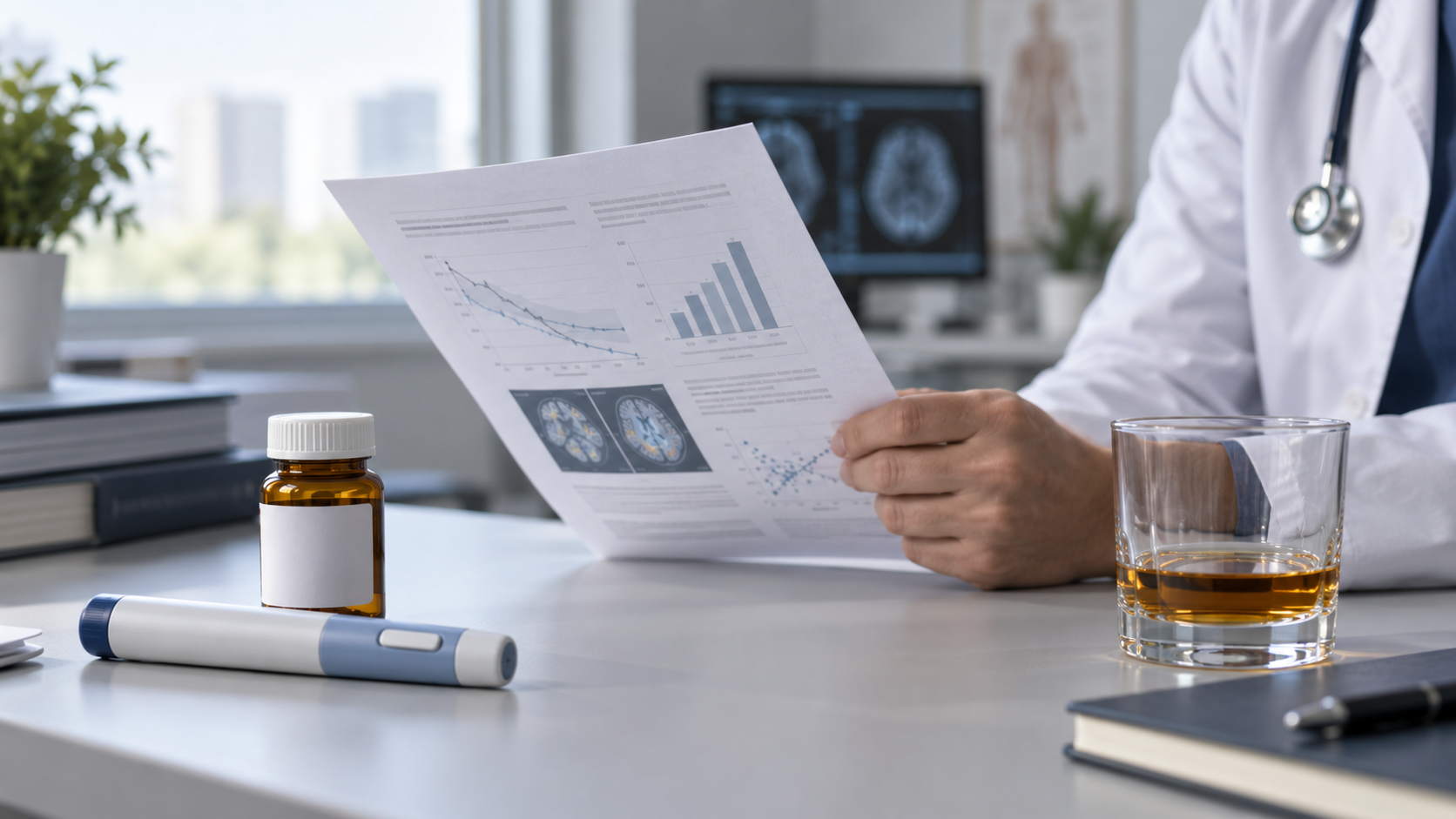
Ozempic for Alcohol Addiction? What New Semaglutide Research Shows
Updated September 7, 2026
Semaglutide—the active ingredient in Ozempic, Wegovy and certain oral GLP-1 medications—is attracting serious attention as a possible future treatment for alcohol use disorder. What began with anecdotal reports of people losing interest in alcohol has now progressed to observational studies and several randomized clinical trials.
The findings are promising: participants receiving semaglutide have reported fewer heavy-drinking days, fewer drinks when they do drink and reduced alcohol cravings. A 2026 trial involving adults with alcohol use disorder and obesity produced some of the strongest results so far.
However, the headlines require an important qualification.
Ozempic is not approved by the U.S. Food and Drug Administration to treat alcohol addiction or alcohol use disorder. Semaglutide should not be obtained or used as a do-it-yourself treatment for drinking, and it cannot safely manage alcohol withdrawal.
The emerging evidence suggests semaglutide may eventually become another tool in addiction medicine—not that it should replace medical detoxification, behavioral treatment or medications already supported for alcohol use disorder.
The Short Answer: Can Ozempic Reduce Alcohol Cravings?
Possibly. Multiple studies now suggest semaglutide can reduce certain measures of alcohol craving and heavy drinking. But researchers have not yet established which patients are most likely to benefit, the best dose, how long treatment should continue or what happens after the medication is discontinued.
The current evidence can be summarized this way:
- Randomized trials have found reductions in heavy-drinking days, drinking intensity or cravings.
- Not every primary outcome improved in every trial.
- Some of the strongest evidence involves people who had both alcohol use disorder and obesity.
- Participants in a major 2026 trial also received cognitive behavioral therapy.
- Semaglutide remains an investigational, off-label option for alcohol use disorder.
- Larger, longer and more diverse trials are still needed.
Anyone physically dependent on alcohol should also understand that reducing cravings and treating withdrawal are entirely different medical issues. Suddenly stopping alcohol can cause seizures, hallucinations, delirium tremens and other life-threatening complications. Learn more about why alcohol withdrawal can be dangerous and when supervised alcohol and drug detoxification may be necessary.
What Is Semaglutide?
Semaglutide is a glucagon-like peptide-1 receptor agonist, commonly shortened to GLP-1 receptor agonist or GLP-1 medication. It imitates some of the actions of the naturally occurring GLP-1 hormone, which is involved in blood-sugar regulation, digestion, appetite and feelings of fullness.
Semaglutide is sold under different brand names and formulations:
- Ozempic is an injectable semaglutide product approved for certain adults with type 2 diabetes, including specific cardiovascular and kidney-risk indications.
- Wegovy is a semaglutide product approved for chronic weight management and certain other indications.
- Oral formulations of semaglutide are also available for approved metabolic uses.
Calling the potential treatment “Ozempic for alcohol addiction” is understandable because Ozempic is the most recognizable brand name. Scientifically, however, semaglutide for alcohol use disorder is more accurate. The studies evaluate the active medication in different doses and formulations, not necessarily the use of Ozempic as labeled.
The current FDA prescribing information for Ozempic does not list alcohol use disorder as an approved indication.
Why Might a GLP-1 Medication Affect Alcohol Use?
Alcohol addiction involves far more than willpower. Alcohol can influence reward, motivation, stress and learning systems in the brain. Repeated exposure may strengthen the association between drinking and perceived relief or reward, while cues such as certain people, places, emotions or times of day can trigger powerful urges.
GLP-1 receptors are present not only in the digestive system but also in brain regions involved in appetite, reinforcement and reward-related behavior. Researchers are investigating whether activating these receptors can make alcohol feel less compelling or reduce the drive to continue drinking after the first drink.
Possible mechanisms include:
- Reducing the anticipated reward associated with alcohol
- Weakening cue-triggered cravings
- Reducing the amount consumed during a drinking episode
- Increasing feelings of fullness or physical discomfort after consumption
- Influencing dopamine and reward signaling
- Improving metabolic or inflammatory conditions that can coexist with heavy drinking
These mechanisms are still being studied. It would be premature to conclude that semaglutide simply “turns off addiction.” Alcohol use disorder is influenced by biology, mental health, trauma, environment, relationships and learned behavior. Medication may help change part of that system without resolving every factor maintaining the disorder.
For a broader explanation, see how addiction affects the brain.
What Did the 2025 Randomized Semaglutide Trial Find?
A landmark phase 2 study published in JAMA Psychiatry in 2025 was the first randomized clinical trial to prospectively test semaglutide in adults with alcohol use disorder.
Researchers randomized 48 adults to receive once-weekly injectable semaglutide or a placebo during nine weeks of outpatient treatment. Participants were not actively seeking treatment for their alcohol use, and most had moderate rather than extremely severe alcohol use disorder.
Compared with placebo, low-dose semaglutide:
- Reduced the amount of alcohol participants consumed during a laboratory self-administration session
- Reduced peak breath-alcohol concentration during that session
- Reduced drinks consumed per drinking day
- Reduced weekly alcohol cravings
- Produced greater reductions in heavy drinking over time
The medication did not significantly reduce every outcome. Researchers did not find a significant effect on average drinks per calendar day or the total number of drinking days.
That distinction matters. A person might continue drinking on a similar number of days while consuming less alcohol on each occasion. That could still reduce harm, but it is different from achieving abstinence.
The study was also small and short. Only 25 participants had complete data for the post-treatment laboratory alcohol-consumption analysis. Researchers therefore described the findings as initial evidence supporting larger trials—not proof that semaglutide is an established treatment.
The full study, “Once-Weekly Semaglutide in Adults With Alcohol Use Disorder,” was published in February 2025.
The 2026 Lancet Trial Produced Stronger Evidence
A larger randomized, double-blind trial published in The Lancet in 2026 studied 108 treatment-seeking adults who had both alcohol use disorder and obesity.
Participants received once-weekly semaglutide, gradually increased toward 2.4 milligrams, or a placebo for 26 weeks. Importantly, both groups also received cognitive behavioral therapy.
At the start of the trial, participants averaged approximately 17 heavy-drinking days per month. By the end:
- Participants receiving semaglutide averaged approximately five heavy-drinking days.
- Participants receiving placebo averaged approximately nine.
- The proportion of heavy-drinking days declined about 41 percentage points with semaglutide versus approximately 26 percentage points with placebo.
- The estimated between-group difference was 13.7 percentage points in favor of semaglutide.
Semaglutide was also associated with improvements in total alcohol consumption, drinks per drinking day, alcohol craving and World Health Organization drinking-risk levels.
The results represent meaningful progress because the participants wanted treatment and the study continued for approximately six months. Still, the findings do not establish semaglutide as a stand-alone treatment.
Every participant had obesity, making it uncertain whether the same results would occur in people without obesity. Both groups received therapy, and the placebo group also improved substantially. The trial therefore supports semaglutide as a possible addition to comprehensive treatment—not as evidence that therapy is unnecessary.
The study can be reviewed through the National Library of Medicine’s PubMed record and its registration on ClinicalTrials.gov.
A 2026 Oral Semaglutide Trial Found Mixed but Encouraging Results
A separate phase 2 randomized trial published in the American Journal of Psychiatry in July 2026 evaluated oral semaglutide in 50 treatment-seeking adults with moderate to severe alcohol use disorder.
Participants received either:
- Three milligrams of oral semaglutide daily for four weeks, followed by seven milligrams daily for four weeks; or
- A matching placebo for eight weeks.
The study did not meet its primary laboratory endpoint for cue-triggered craving. Semaglutide also did not significantly reduce average drinks per calendar day compared with placebo.
Several clinically relevant secondary measures did improve. Participants receiving semaglutide experienced:
- Fewer heavy-drinking days during the second half of treatment
- Fewer drinks on days when they drank
- Reduced everyday alcohol cravings
- Fewer alcohol-related negative consequences
- Greater odds of moving into a lower WHO drinking-risk category
By the end of treatment, 81% of the semaglutide group had reduced its WHO risk level by at least one category, compared with approximately 54% of the placebo group.
These results reinforce the need to report the evidence carefully. Semaglutide did not succeed on every planned measurement, but it produced improvements in several important real-world drinking outcomes. The American Psychiatric Association’s research summary provides additional details.
Comparing the Major Semaglutide and Alcohol Studies
| Study | Participants | Treatment | Main findings | Important limitation |
|---|---|---|---|---|
| JAMA Psychiatry, 2025 | 48 | Weekly injectable semaglutide for nine weeks | Less laboratory alcohol consumption, fewer drinks per drinking day and lower cravings | Small, short trial involving people who were not seeking AUD treatment |
| The Lancet, 2026 | 108 | Weekly semaglutide for 26 weeks plus therapy | Greater reduction in heavy-drinking days, consumption and cravings than placebo plus therapy | All participants also had obesity |
| American Journal of Psychiatry, 2026 | 50 | Daily oral semaglutide for eight weeks | Fewer heavy-drinking days and drinks per drinking day; lower everyday craving | Primary laboratory craving endpoint was not met |
| Nature Communications, 2024 | Large electronic-health-record populations | Real-world semaglutide prescriptions | Semaglutide use was associated with fewer new or recurrent AUD diagnoses | Observational association cannot prove causation |
The 2024 Nature Communications study added important real-world evidence, but it was not a randomized trial. People prescribed semaglutide may differ from comparison groups in ways that health records cannot fully capture. Randomized trials provide stronger evidence for determining whether the medication itself caused an outcome.
Is Ozempic Approved for Alcohol Addiction?
No. As of September 7, 2026, neither Ozempic nor another semaglutide product is FDA-approved specifically for alcohol use disorder.
A clinician can sometimes prescribe an approved medication “off-label” when medical judgment and available evidence support its use. That does not mean the treatment has completed the FDA approval process for the off-label condition.
Patients should not assume that:
- A prescription for diabetes or obesity automatically treats alcohol addiction.
- More medication will produce a greater reduction in alcohol cravings.
- Semaglutide can prevent alcohol-withdrawal complications.
- An online or compounded product is equivalent to an FDA-approved medication.
- Reduced desire to drink means alcohol dependence has safely resolved.
The FDA has warned consumers about unapproved and illegally marketed GLP-1 products. Semaglutide should be prescribed and monitored by a qualified healthcare professional.
Semaglutide Does Not Treat Alcohol Withdrawal
Semaglutide is not a detoxification medication. Someone who drinks heavily every day or has experienced withdrawal before should not abruptly stop based solely on reduced cravings.
Alcohol withdrawal symptoms can include:
- Shaking or tremors
- Sweating
- Nausea and vomiting
- Anxiety or agitation
- Rapid heart rate
- Insomnia
- Hallucinations
- Seizures
- Severe confusion or delirium tremens
Withdrawal symptoms can escalate quickly. A medical team may use monitoring, fluids, nutritional support and specific medications to reduce the risk of serious complications.
Call 911 or seek emergency medical care for seizures, hallucinations, severe confusion, loss of consciousness, trouble breathing, chest pain or rapidly worsening symptoms. People unsure about what level of care is appropriate can review what to expect during detox or find guidance on locating detox services that are open now.
What Are the Current Medications for Alcohol Use Disorder?
The FDA-approved medication options for alcohol use disorder remain:
Naltrexone
Naltrexone blocks opioid receptors involved in alcohol’s rewarding effects. It can reduce cravings and heavy drinking and is available as an oral medication or extended-release injection. It is generally inappropriate for someone currently using opioids because it can precipitate opioid withdrawal and interfere with opioid pain treatment.
Acamprosate
Acamprosate may help people maintain abstinence after stopping alcohol. It is taken multiple times per day and requires consideration of kidney function.
Disulfiram
Disulfiram interferes with alcohol metabolism and can cause a highly unpleasant reaction if alcohol is consumed. It does not directly eliminate cravings and requires careful patient selection, education and adherence.
The National Institute on Alcohol Abuse and Alcoholism explains these medications and the continued search for additional treatments. Other medications, including topiramate and gabapentin, may sometimes be considered off-label by a clinician.
Medication works best when selected around the individual’s health, goals, drinking pattern, other substance use and ability to follow the treatment plan. TheRecover.com’s guide to medications for addiction explains how medication may fit into broader care.
What Are the Risks of Semaglutide?
Semaglutide is not appropriate for everyone. Common adverse effects involve the gastrointestinal system and may include nausea, vomiting, diarrhea, abdominal discomfort and constipation.
The FDA prescribing information also addresses serious potential risks and precautions, including:
- Acute pancreatitis
- Gallbladder disease
- Dehydration and acute kidney injury
- Severe gastrointestinal reactions
- Hypoglycemia when combined with certain diabetes medications
- Allergic reactions
- Complications related to diabetic retinopathy
- Aspiration risk during procedures involving anesthesia or deep sedation
Semaglutide products carry a boxed warning concerning thyroid C-cell tumors observed in rodents. It is unknown whether semaglutide causes these tumors in humans. Ozempic is contraindicated in people with a personal or family history of medullary thyroid carcinoma or Multiple Endocrine Neoplasia syndrome type 2.
Heavy alcohol use can independently affect the pancreas, liver, blood sugar, hydration and nutritional status. That makes an honest medical history especially important when discussing semaglutide with a clinician.
Could Semaglutide Replace Rehab or Therapy?
Current evidence does not support replacing comprehensive alcohol treatment with semaglutide.
Effective care may include:
- Medical withdrawal evaluation
- Inpatient or outpatient detoxification
- Residential or inpatient rehabilitation
- Outpatient addiction treatment
- Cognitive behavioral therapy
- Motivational enhancement therapy
- FDA-approved AUD medication
- Treatment for depression, anxiety, trauma or other co-occurring conditions
- Family or relationship support
- Mutual-help groups and continuing care
- Relapse-prevention planning
The large 2026 semaglutide trial included cognitive behavioral therapy for both groups. That design reinforces an important point: medication and therapy do not have to compete. Future treatment models may combine a GLP-1 medication with counseling, recovery support and medical care.
Who Should Talk to a Doctor About This Research?
A conversation with a physician or addiction-medicine professional may be reasonable if someone:
- Has alcohol use disorder and is already being evaluated for an approved semaglutide indication
- Has alcohol use disorder along with obesity or type 2 diabetes
- Has not responded adequately to established AUD treatments
- Is experiencing an unexpected reduction in alcohol use after beginning a GLP-1 medication
- Wants to understand approved and investigational medication options
- Has liver, pancreatic, kidney, metabolic or nutritional concerns related to drinking
The discussion should cover the person’s full medication list, alcohol consumption, prior withdrawal symptoms, opioid use, diabetes treatment, family thyroid-cancer history, pregnancy considerations and treatment goals.
Frequently Asked Questions
Does Ozempic stop alcohol cravings?
Some people taking semaglutide report less interest in alcohol, and randomized trials have found reductions in certain craving measures. It does not eliminate cravings for everyone, and Ozempic is not approved as an alcohol-craving medication.
Can semaglutide cure alcohol addiction?
No medication is considered a universal cure for alcohol use disorder. Semaglutide may eventually help reduce cravings or heavy drinking for some patients, but long-term recovery can still require medical care, behavioral treatment and ongoing support.
Can I ask my doctor for Ozempic to stop drinking?
You can discuss the research and your drinking with a qualified clinician. Whether an off-label prescription is appropriate depends on your health, treatment history, risks and the clinician’s judgment. Do not buy semaglutide from an unverified source.
Can I drink alcohol while taking Ozempic?
Patients should ask their prescriber for individualized advice. Alcohol use may complicate blood-sugar control, dehydration, gastrointestinal symptoms and conditions affecting the liver or pancreas. People with alcohol use disorder should be honest about how much and how often they drink.
Will insurance cover semaglutide for alcohol use disorder?
Coverage specifically for alcohol use disorder is unlikely because semaglutide is not approved for that indication. Coverage may be possible when a patient independently meets an insurer’s criteria for an approved indication, but plans, formularies and authorization requirements vary.
Does semaglutide work for people who are not overweight?
The early 2025 trial included participants across different weight categories, but the strongest and longest 2026 randomized trial required obesity. More research is needed to determine effectiveness in people without obesity.
What happens when semaglutide is stopped?
Researchers have not yet established whether reductions in alcohol craving and drinking persist after semaglutide is discontinued. Continuing therapy and relapse-prevention support may be particularly important if medication is stopped.
The Bottom Line
Semaglutide has moved beyond social-media anecdotes as a possible treatment for alcohol addiction. Randomized trials now indicate that injectable and oral semaglutide may reduce heavy-drinking days, drinking intensity, alcohol cravings and alcohol-related consequences.
The evidence is meaningful—but it remains incomplete.
Ozempic is not FDA-approved for alcohol use disorder. Semaglutide cannot safely manage withdrawal, should not be used without medical supervision and should not be presented as a replacement for proven addiction treatment. The most responsible interpretation is that GLP-1 medications may become valuable additions to alcohol treatment if larger trials confirm their benefits, clarify their risks and identify which patients are most likely to respond.
If alcohol is causing health, work, legal or relationship problems, help is available now. You do not need to wait for a future medication approval. TheRecover.com can help individuals and families understand detox, inpatient and outpatient treatment options. Call (888) 510-3898 for confidential treatment-navigation assistance.
Medical disclaimer: This article is for educational purposes and does not provide medical advice, diagnosis or treatment. Semaglutide is not FDA-approved to treat alcohol use disorder. Never begin, stop or change a prescription medication or abruptly stop heavy alcohol use without appropriate medical guidance.