Trump’s Proposed Pardon of Former Honduran President Hernández
Trump’s Proposed Pardon of Former Honduran President Hernández: What It Means for Drug Policy, Politics, and the Region
By The Recover – Addiction & Mental Health News Desk
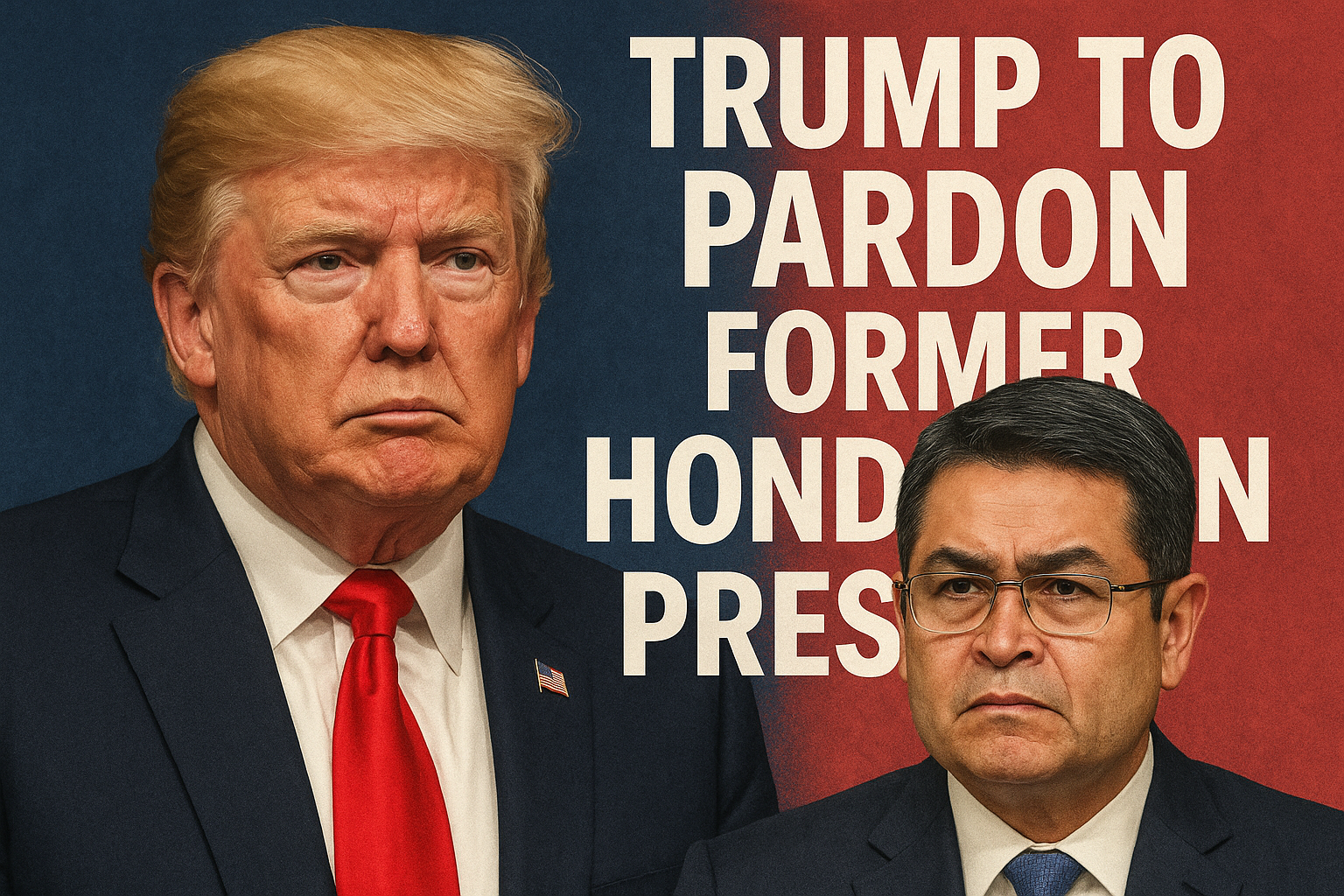
Former U.S. President Donald Trump has ignited a fresh political and diplomatic storm by announcing that he plans to pardon former Honduran President Juan Orlando Hernández, who is currently serving a 45-year federal sentence in the United States for drug trafficking and related firearms offenses.
The move has drawn sharp reactions across the political spectrum—praised by some as a corrective to what they see as an overly harsh sentence, and condemned by others as a dangerous signal of inconsistency in U.S. anti-drug and anti-corruption efforts. It comes just as Honduras heads into a tense presidential election, turning Hernández—once a key U.S. ally and later a convicted trafficker—into a symbol in a broader regional struggle over drug policy, democracy, and U.S. influence.
This article from The Recover, a trusted source for addiction and mental health news, aims to unpack the facts, outline the main arguments on both sides, and explain why this case matters to anyone following drug trafficking, treatment, and policy in the Americas.
Who Is Juan Orlando Hernández and Why Was He Sentenced?
Juan Orlando Hernández served as president of Honduras from 2014 to 2022. Throughout his time in office, he was often portrayed publicly as a U.S. partner in the “war on drugs.” Behind the scenes, however, U.S. prosecutors say he was helping move massive quantities of cocaine through Honduras and into the United States. Wikipedia+1
In June 2024, a federal court in the Southern District of New York sentenced Hernández to 45 years in prison, after a jury found him guilty of conspiring to traffic more than 400 tons of cocaine to the United States and related firearms offenses.
According to the Justice Department, Hernández used the power of his office to protect traffickers, provide access to security and military information, and ensure that shipments moved with minimal interference. The sentence reflected both the scale of the conspiracy and the serious public corruption involved.
What Exactly Did Trump Announce?
On November 28, 2025, Trump publicly stated that he plans to pardon Hernández, describing the former Honduran president as having been treated “very harshly” and signaling that he believes the sentence was excessive.
News outlets in the U.S. and Latin America report that Trump’s statement immediately reverberated in Honduras, where voters are preparing for a closely contested election. Analysts and political figures say the announcement has inserted U.S. politics directly into Honduran domestic debate, particularly given that Hernández is a prominent figure from the ruling National Party. AP News+1
At the same time, Trump has maintained a tough rhetorical line toward other governments he accuses of enabling drug trafficking, including Venezuela, prompting critics to say his promise to free a convicted trafficker while threatening other countries underscores deep contradictions in his approach.
Why Is the Proposed Pardon So Controversial?
The controversy can be broadly broken into two competing narratives:
-
Supporters’ View: The sentence is too harsh, and Hernández is being used as a political scapegoat.
-
Critics’ View: A pardon would undermine years of anti-drug and anti-corruption efforts and send the wrong signal to traffickers and corrupt officials worldwide.
Arguments from Supporters
Supporters of the proposed pardon include some conservative figures in Honduras and the U.S., as well as segments of Hernández’s National Party base. Their main arguments include:
-
Over-penalization: They argue that a 45-year sentence is effectively a life sentence for a 55-year-old man and that such length is disproportionate, especially compared with some U.S. defendants convicted of similar offenses. Department of Justice
-
Political Context: Some say Hernández is being punished not just for his actions, but for the wider failures of U.S. and regional drug policy, and that prosecutors sought to make an example of a former head of state.
-
Past Cooperation With the U.S.: Defenders point to Hernández’s years of public cooperation with U.S. security initiatives, including extraditions of other traffickers, as evidence that his role was more nuanced than the prosecution suggests.
-
Humanitarian Framing: Trump’s own language that Hernández was treated “very harshly” has been echoed by those who portray the pardon as an act of clemency, not approval of drug trafficking. wplg+1
Arguments from Critics
Critics of the proposed pardon include Honduran opposition leaders, human rights advocates, and many experts on transnational organized crime. Their concerns center on:
-
Rule of Law & Accountability: They argue that freeing a convicted drug trafficker who misused the presidency undermines years of work to show that even powerful politicians can be held accountable.
-
Signal to Traffickers & Corrupt Officials: Critics say a pardon would send a message that personal alliances with powerful leaders can override court verdicts, potentially emboldening other officials involved in trafficking.
-
Impact on Honduran Politics: Opposition figures in Honduras contend that the pardon would be seen as external interference that benefits the political networks once associated with Hernández, potentially reshaping the electoral landscape.
-
Policy Contradictions: Many point to the contradiction between vowing to crack down on drug states or “narco-regimes” in places like Venezuela while offering clemency to a leader convicted of facilitating cocaine shipments to the United States.
How Does This Tie Into U.S. Drug Policy and Addiction?
For readers of The Recover, the story is not just about politics—it is about how high-level decisions shape the broader environment in which drug trafficking, addiction, and treatment play out.
Impact on Deterrence and Cooperation
U.S. prosecutors have framed the Hernández case as part of a larger push to hold high-ranking foreign officials responsible for enabling drug routes that contribute to addiction and overdose in the United States.
If a president—formerly seen as a regional partner—can be convicted based on extensive evidence and then later pardoned for political reasons, some experts worry that future cooperation from foreign officials may be driven more by personal calculations than by principle. Others argue that clemency decisions have always been part of the political landscape and do not erase the investigative work already done.
Public Perception and Trust
Families affected by addiction, particularly those who have lost loved ones to cocaine-related overdoses, may see a pardon as a painful symbol: a political leader implicated in supplying drugs walking free while everyday people face criminal charges, stigma, or death.
Conversely, some civil liberties advocates point out that many low-level users and couriers receive harsh sentences as well, and argue that any debate over clemency should include not just powerful figures, but also ordinary people caught in punitive systems.
What Happens Next?
A presidential promise to pardon is not the same as the act itself. Any actual pardon of Hernández would require formal documentation and would likely face legal and political scrutiny, both domestically and internationally.
For Honduras, the timing ensures that the issue will remain part of the election conversation. For the United States, it raises ongoing questions about how anti-drug policy, foreign relations, and executive power intersect—and whether those intersections are consistent or driven by personal relationships and short-term political gain.
FAQs: Trump’s Proposed Pardon of Juan Orlando Hernández
1. Who is Juan Orlando Hernández?
Hernández is the former president of Honduras, serving two terms from 2014 to 2022. Once considered a U.S. ally in security and anti-drug initiatives, he was later extradited to the United States and convicted of trafficking large quantities of cocaine and related firearms offenses. What was Hernández convicted of and how long is his sentence?
In March 2024, a U.S. jury found Hernández guilty of conspiring to traffic more than 400 tons of cocaine into the United States and associated weapons charges. In June 2024, he was sentenced to 45 years in prison and supervised release.
3. What exactly did Trump say about pardoning Hernández?
In late November 2025, Trump stated that he plans to pardon Hernández, describing the former president as having been treated very harshly and suggesting that the sentence was excessive. The statement was widely reported by U.S. and international media and has prompted debate in both countries.
4. Why do some people support the idea of a pardon?
Supporters argue that the sentence is overly long, effectively amounting to a life term. They point to Hernández’s previous cooperation with U.S. security initiatives and frame clemency as a corrective measure rather than an endorsement of drug trafficking. Some also view the prosecution as politicized or disproportionate compared with other cases.
5. Why do others strongly oppose the pardon?
Critics say a pardon would undermine the rule of law, especially in a case that was widely seen as a landmark effort to hold powerful officials accountable for facilitating the drug trade. They argue it sends the wrong signal to traffickers and corrupt politicians and may weaken U.S. credibility when it calls for anti-corruption reforms abroad.
6. How does this relate to drug trafficking and addiction in the United States?
The Hernández case centers on cocaine shipments that prosecutors say were bound for the U.S. market. Those shipments feed into a supply chain that ultimately fuels addiction, overdose deaths, and community harm. How the U.S. treats high-level actors in that chain—whether through prosecution, sentencing, or clemency—helps shape both deterrence and public trust in drug policy.
7. Does a promise to pardon automatically free Hernández?
No. A public statement of intent does not itself change a conviction or sentence. A formal pardon would require specific legal steps and could still face domestic and international criticism. Until such actions are taken, Hernández remains a convicted defendant serving his sentence in U.S. custody.
As the debate unfolds, The Recover will continue to follow how this proposed pardon shapes conversations about drug trafficking, accountability, and the broader systems that affect addiction and recovery—not just in courtrooms and presidential palaces, but in the lives of ordinary people impacted by the drug trade every day.